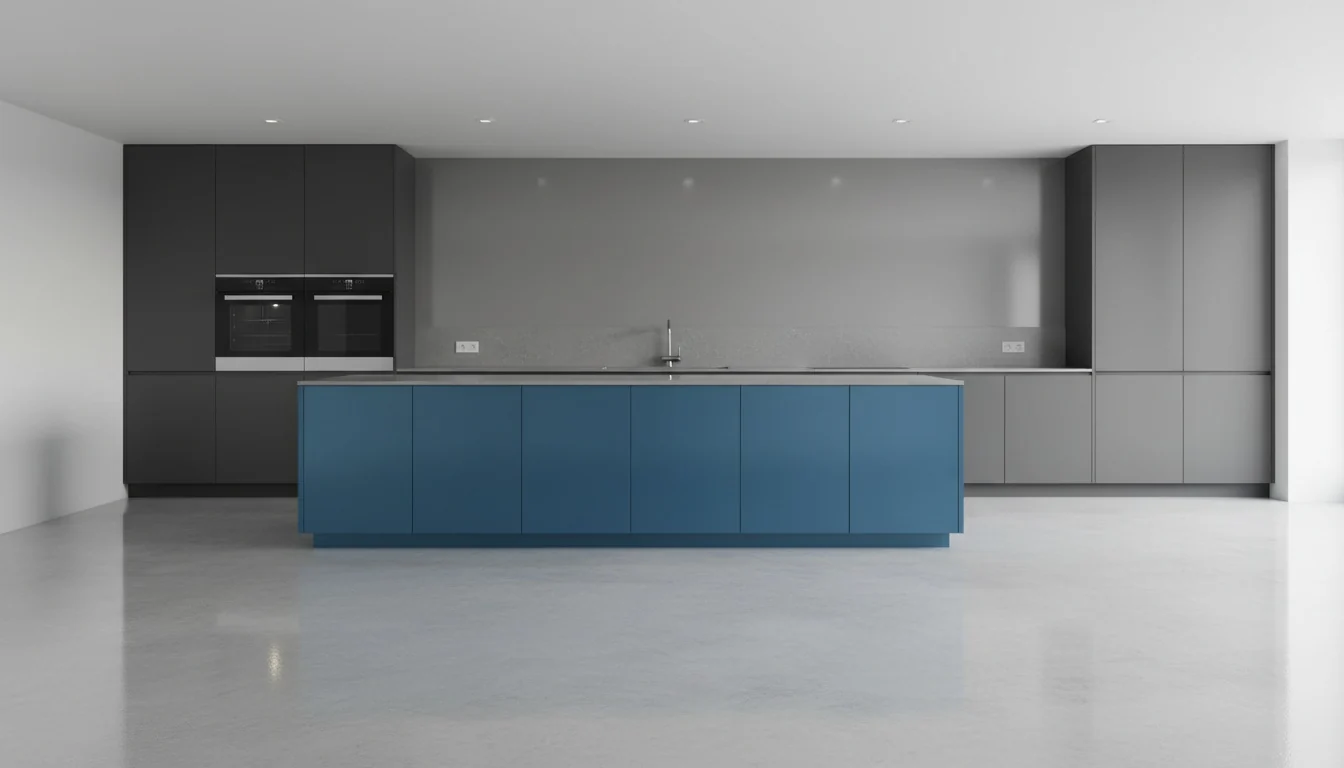

The kitchen is the hardest-working floor in any building. Water, oil, dropped food, hot pans, cleaning chemicals and constant foot traffic all land in one room — and they land there every single day. So when Cape Town homeowners and restaurant owners ask whether an epoxy kitchen floor is a good idea, the honest answer is: for most kitchens, yes, it is one of the best surfaces you can choose. Here is why a seamless resin floor suits a kitchen, where it really shines, and the downsides worth knowing before you commit.
Key takeaways
- Epoxy cures into a seamless, waterproof surface with no grout lines — nothing to trap grease, water or food debris, so it is genuinely hygienic.
- It wipes clean in seconds and resists spills, dropped pans and cleaning chemicals far better than most kitchen floors.
- Plain gloss epoxy can be slippery when wet — an anti-slip additive or matt finish solves this and is essential in any working kitchen.
- It works for both home kitchens and commercial / restaurant kitchens, where seamless coved floors suit food-safety standards.
- The honest trade-offs: it is hard underfoot, it needs proper concrete prep to last, and it is a job for an experienced installer — not a weekend DIY kit.
Why epoxy suits a kitchen
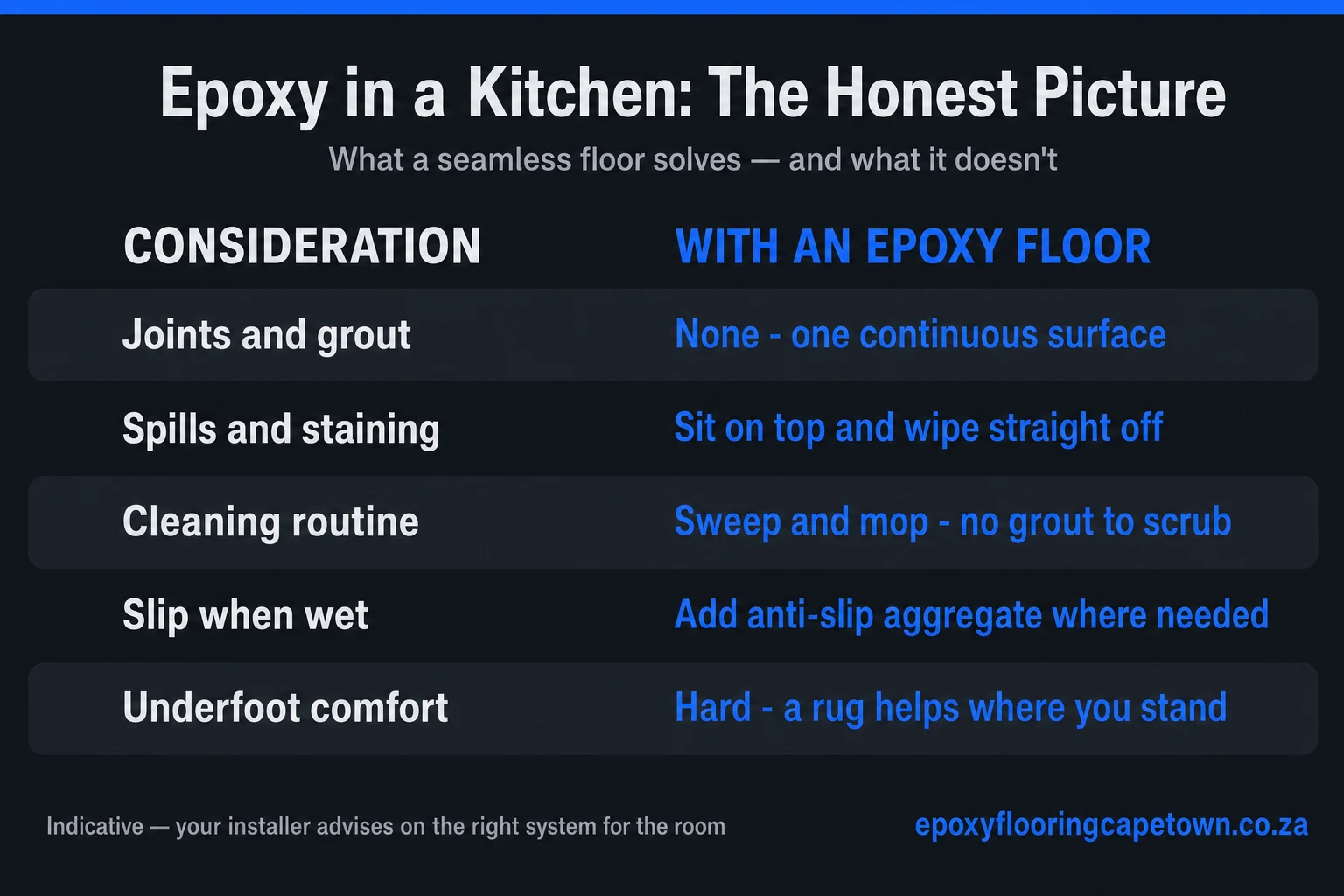
The single biggest reason epoxy works so well in a kitchen comes down to one word: seamless. Unlike tiles, an epoxy floor is poured and cures into one continuous surface across the whole room. There are no grout lines and no joints — and grout lines are exactly where a kitchen floor goes wrong. Grout soaks up spilt sauce, greasy mop water and dropped food, darkens over time, and becomes almost impossible to get properly clean. With seamless hygienic flooring there is simply nowhere for that grime to hide.
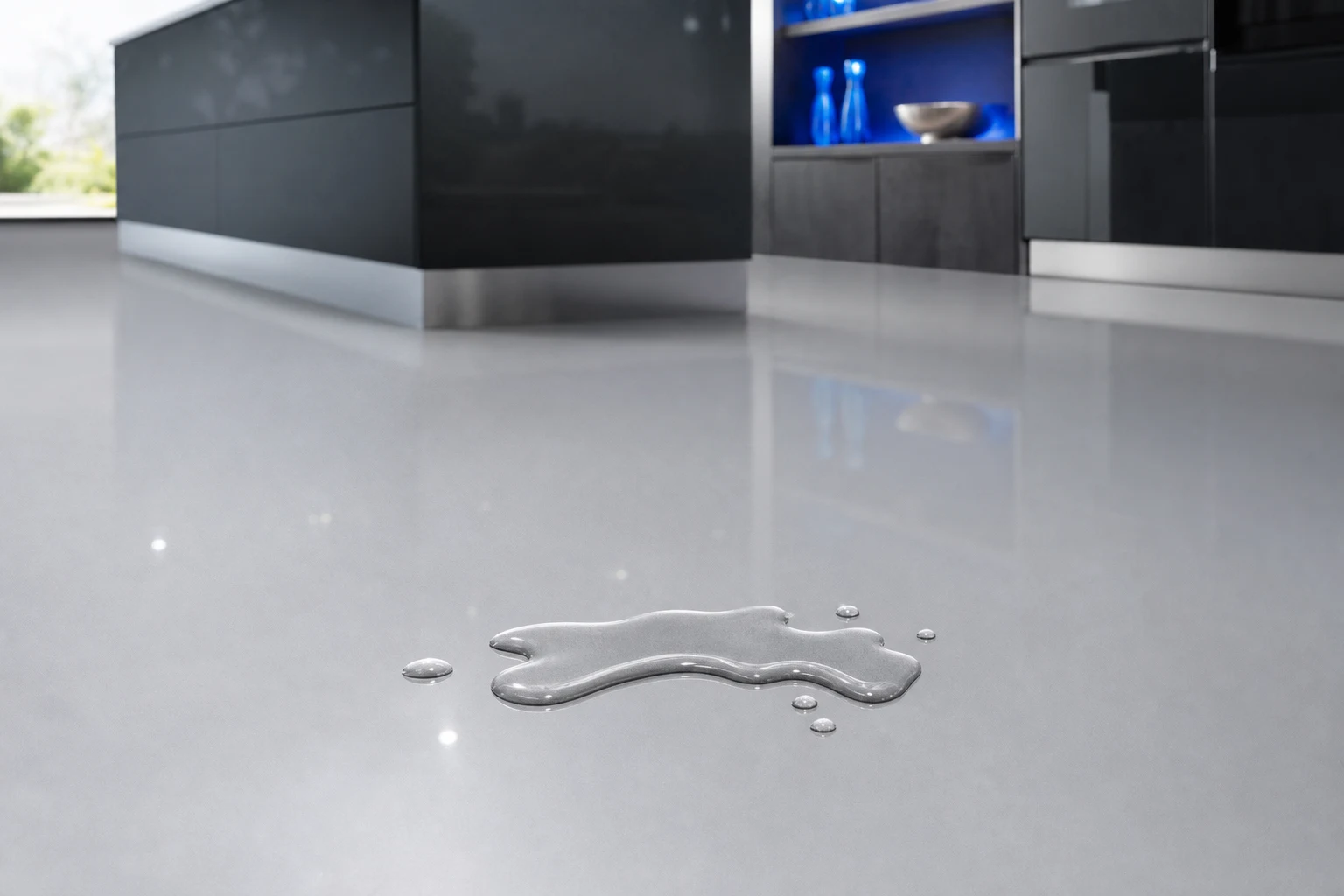
It is also fully waterproof. A well-installed epoxy floor will not let water through to the slab below, which matters by the sink, the dishwasher and the fridge where slow leaks and splashes are a fact of life. Spills sit on the surface instead of soaking in, so a pot of boiling pasta water or a knocked-over bottle of oil is a wipe-up rather than a stain. The cured resin also stands up to the cleaning chemicals, degreasers and acids that a kitchen floor meets every day without dulling or breaking down.
And then there is the cleaning itself, which is where an epoxy kitchen floor earns its keep over the years. There is no grout to scrub, no porous surface to seal, no awkward joints to pick at — just a flat, non-porous floor you can mop, squeegee or wipe down in minutes. If you want the full routine, our guide on keeping the floor clean covers it, but the short version is that the day-to-day upkeep is about as easy as flooring gets.
Slip safety: the part that actually matters in a kitchen
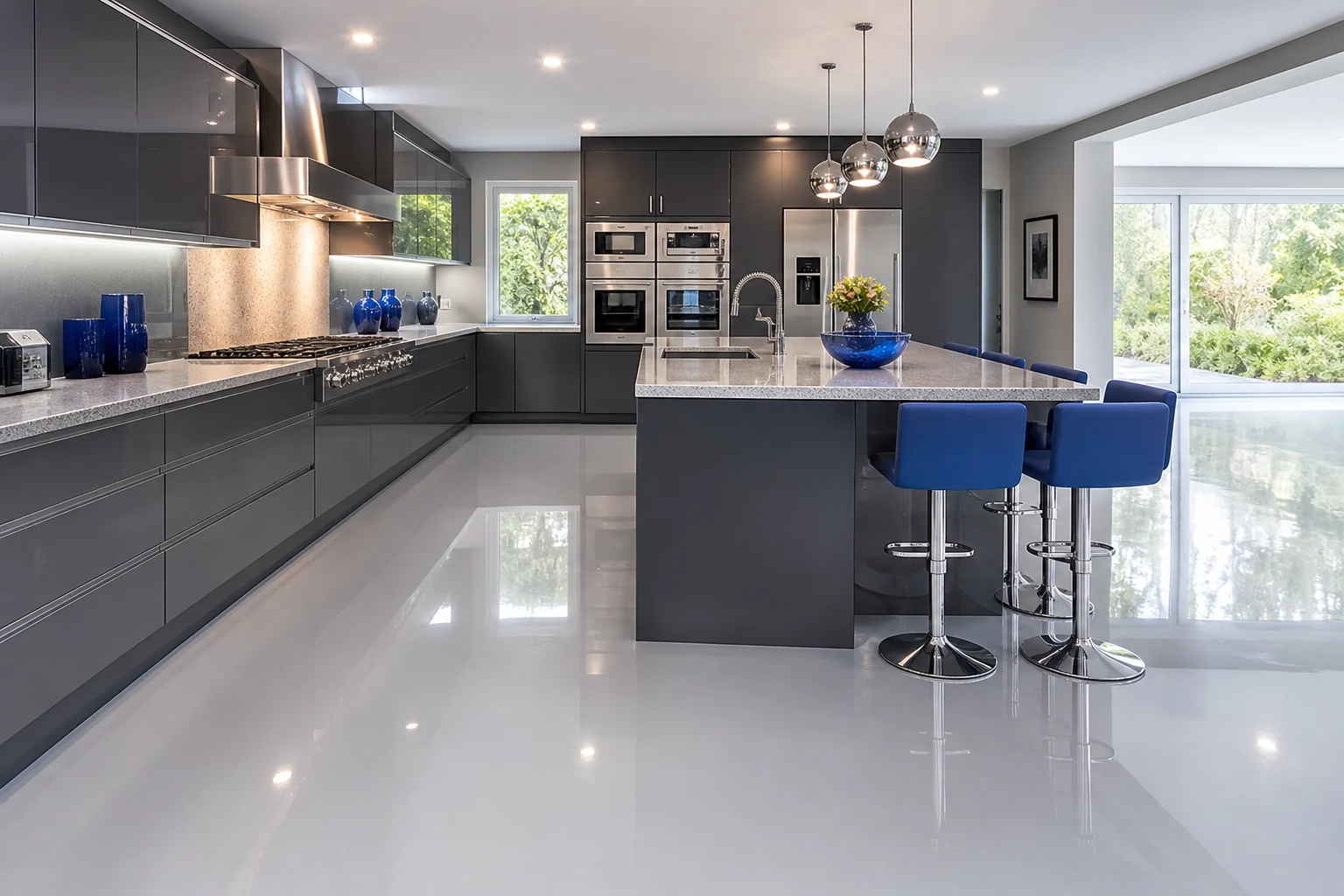
Here is the honest catch, and it is the one thing every kitchen owner needs to get right. A plain high-gloss epoxy floor looks stunning, but gloss plus water plus oil equals slippery — and a kitchen floor is wet and greasy more often than any other floor in the building. Left untreated, a glossy epoxy floor in a busy kitchen is a slip risk, full stop.
The good news is that this is a solved problem. A good installer builds slip resistance straight into the floor by broadcasting a fine anti-slip aggregate — quartz or a polymer grit — into the topcoat, or by specifying a textured matt finish instead of full gloss. The result grips underfoot even when it is wet, while still wiping clean easily. The trick is simply to tell the installer up front that the floor is for a kitchen, so they spec the right level of texture. A textured flake system builds that grip into the finish itself, but the rule of thumb is straightforward either way: no kitchen floor should ever go down as plain gloss.
Home kitchens vs commercial and restaurant kitchens
Epoxy works at both ends of the scale, but the spec changes with the demands of the room.
Home kitchens
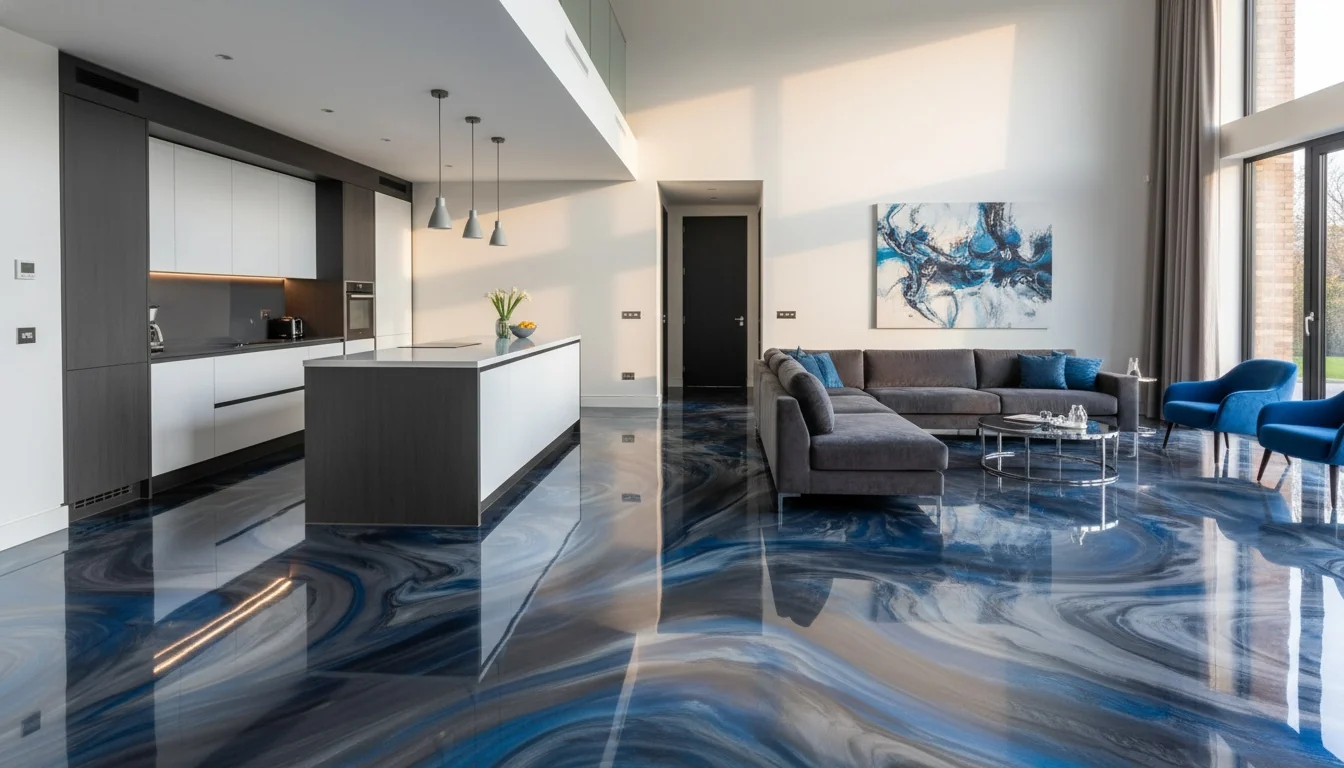
In a family kitchen, the priorities are looks, easy cleaning and a floor that copes with the everyday — kids, pets, dropped crockery and the odd red-wine spill. A mid-weight epoxy system with a subtle anti-slip texture handles all of that comfortably, and it ties in beautifully with open-plan living where the kitchen flows into the dining or lounge area. If you are weighing it up for a whole home, our overview of residential epoxy flooring walks through where it works best room by room.
Commercial and restaurant kitchens
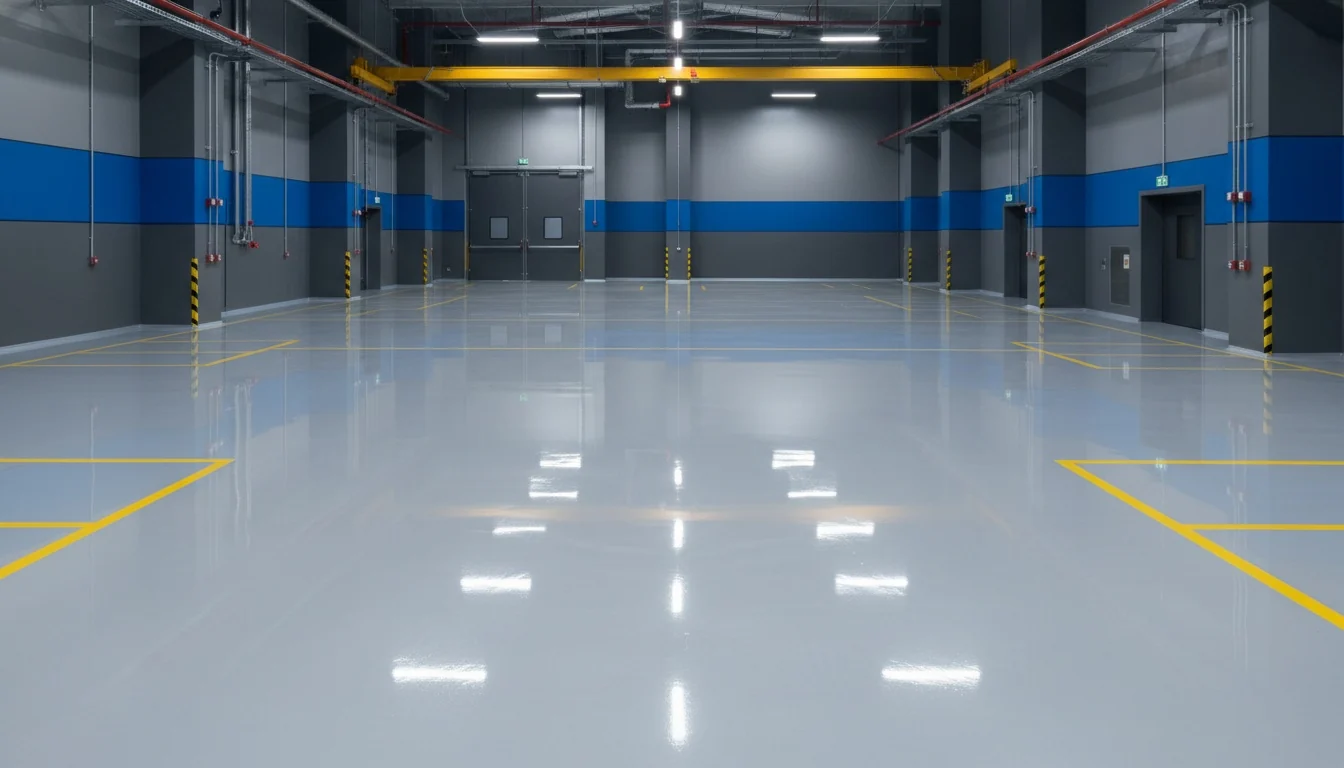
A commercial kitchen is a different animal. The floor faces constant foot traffic, heavy trolleys, hot spills, grease and aggressive daily cleaning — and it is held to food-safety standards. This is exactly where epoxy flooring for commercial kitchens comes into its own. A seamless, waterproof resin floor, coved up the wall to remove the floor-to-wall corner, leaves no joints or crevices for bacteria and grease to gather. That coved, jointless detail is what makes it HACCP-friendly and easy for an inspector to sign off. For these kitchens, installers reach for a heavier-duty epoxy or a polyurethane system with a strong anti-slip finish, built to take the punishment of a working service line.
The looks: it does not have to be clinical
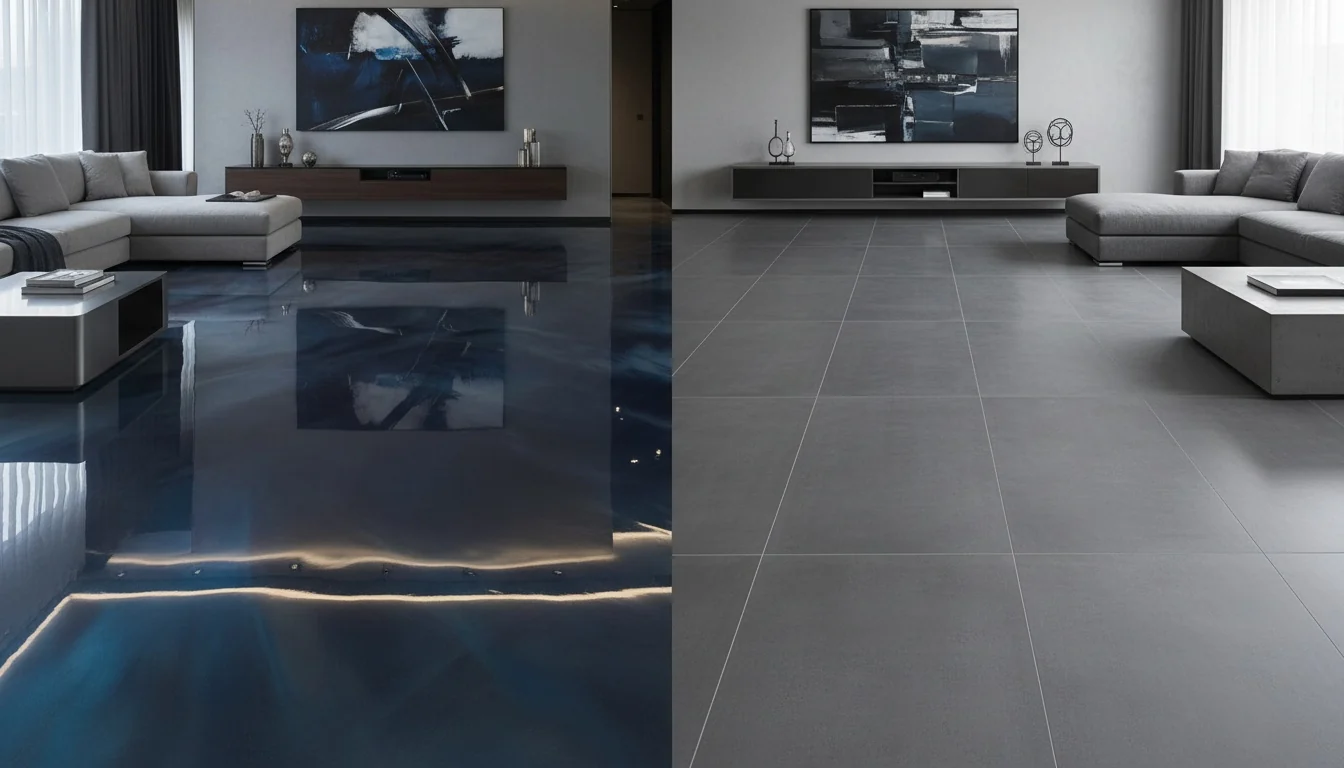
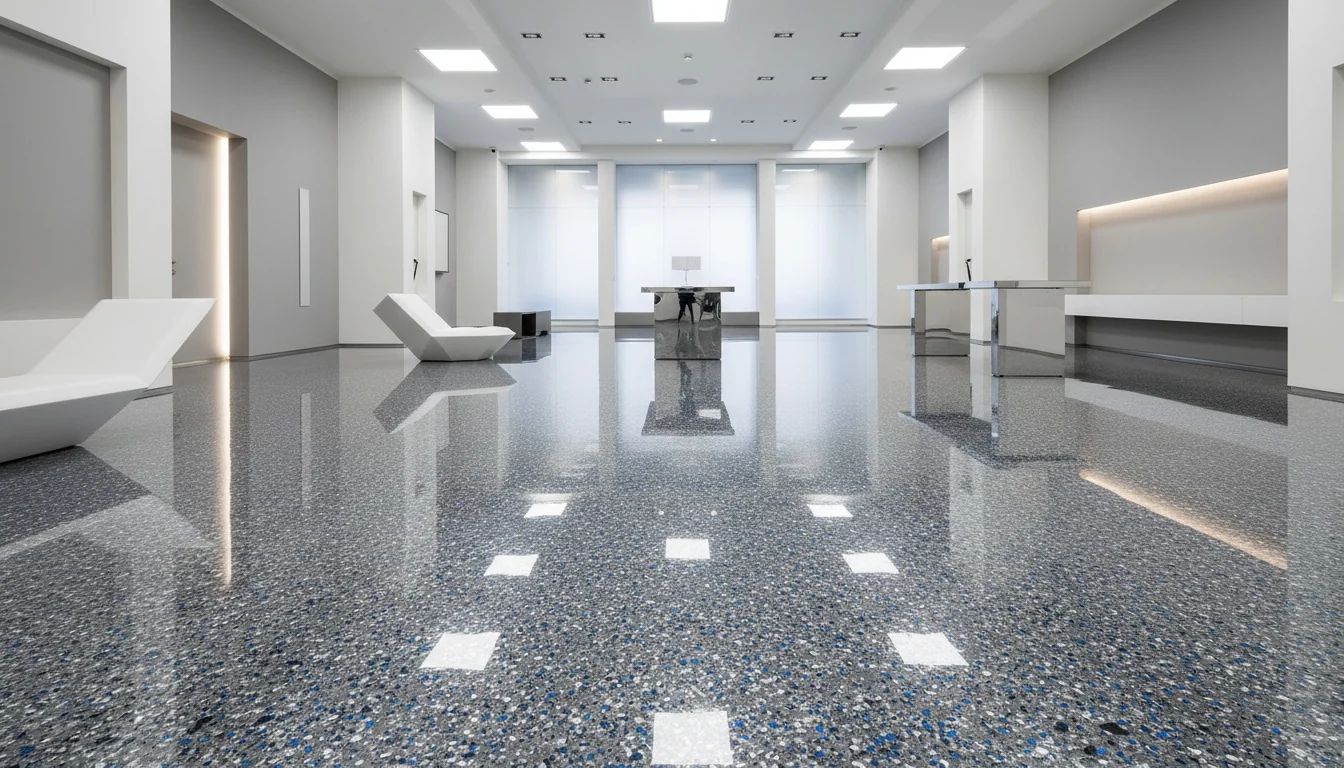
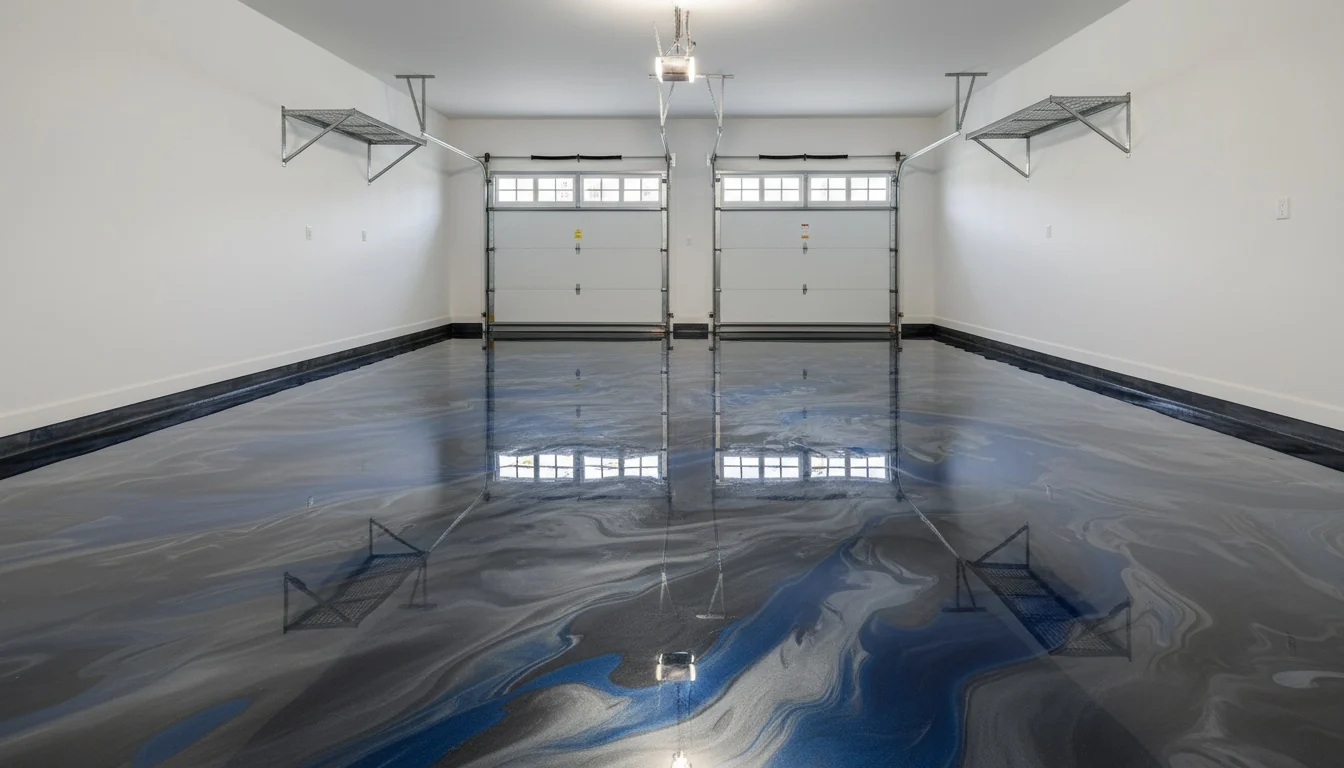
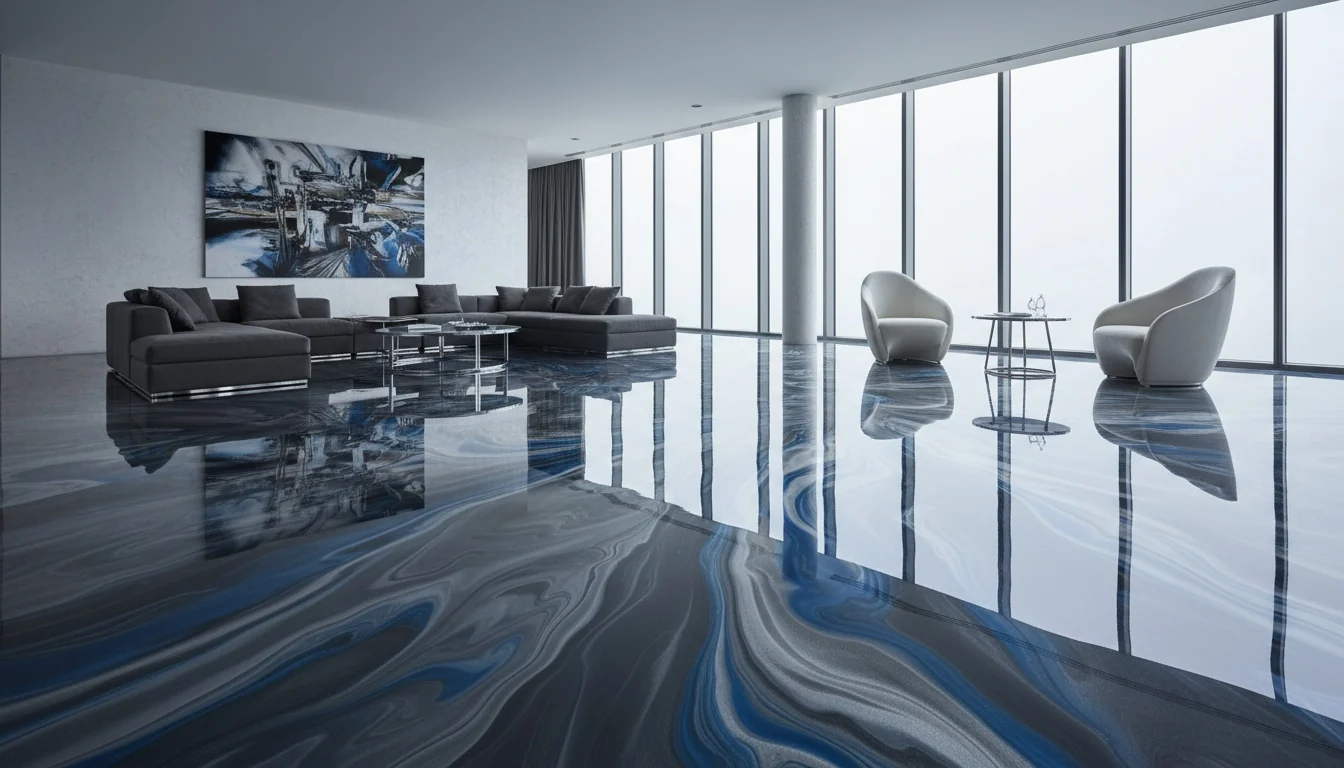
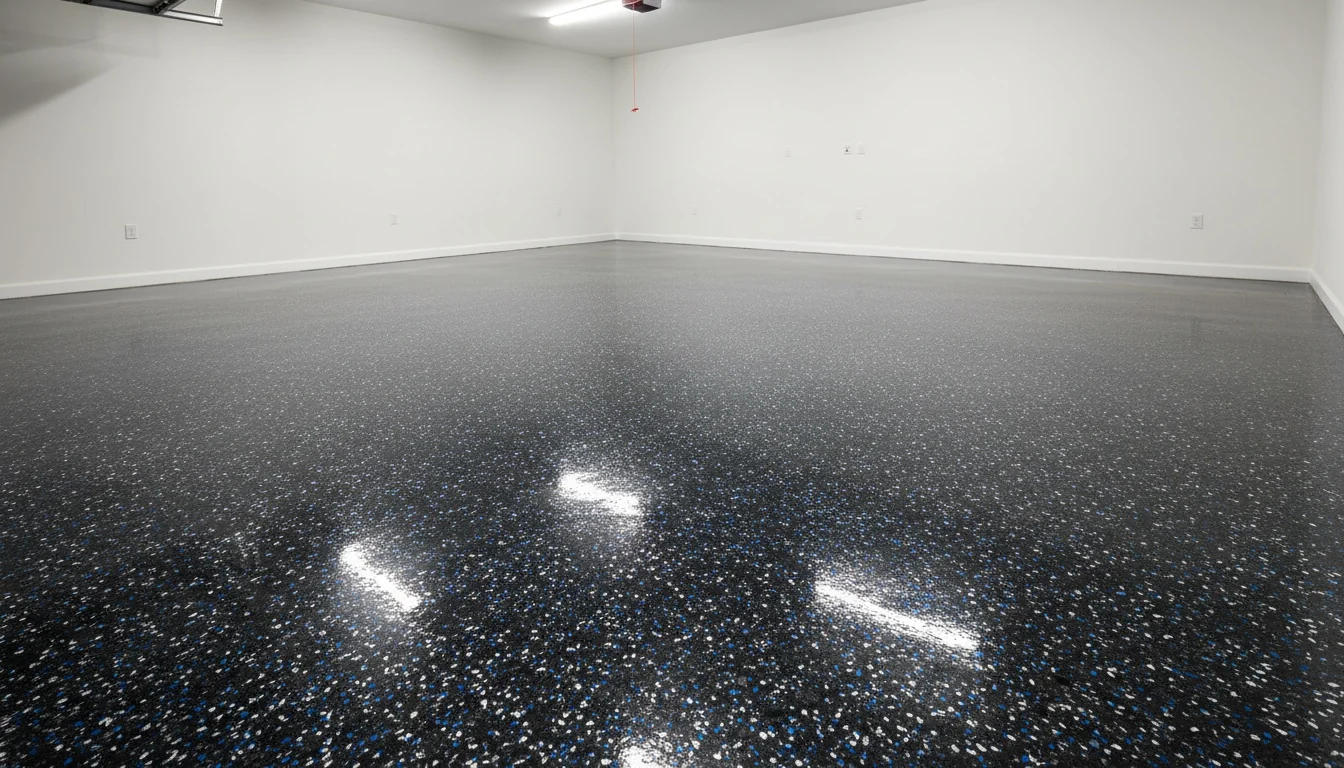
A kitchen floor being practical does not mean it has to be a flat slab of grey. Epoxy comes in a full range of solid colours, so you can match cabinetry or go for a clean, bright, easy-to-light surface. Decorative flake systems scatter coloured chips through the floor for a speckled, hard-wearing finish that hides the bits of life a kitchen collects. And for an open-plan home kitchen that doubles as a feature space, a metallic epoxy floor gives a poured, marbled, almost stone-like look that lifts the whole room — while still being the same seamless, wipe-clean surface underneath. The finish you choose is largely a styling decision; the practical benefits come as standard.
The honest downsides
No floor is perfect, and it would not be fair to sell you only the good parts. Three things are worth knowing before you decide.
It is hard underfoot. Epoxy is a coating over concrete, so it has no give. In a kitchen where you stand and cook for long stretches, that hardness can tire your feet and legs — a cushioned anti-fatigue mat at the sink or stove sorts it, but it is a real consideration, especially in a busy restaurant kitchen.
It can be slippery if you skip the anti-slip step. We have said it already, but it bears repeating because it is the most common mistake: a kitchen floor laid as plain gloss will be slippery when wet. Get the texture specified and this disappears; ignore it and you have a problem.
It lives or dies on the preparation. Epoxy only performs if the concrete beneath it is properly ground, cleaned and free of moisture before a drop of resin goes down. Poor prep is the number-one reason floors peel or bubble later. This is also why a kitchen epoxy floor is not a DIY job — the prep equipment and the timing matter, and it is worth having an experienced installer do it once, properly.
Is epoxy right for your kitchen?
For most kitchens, the answer is yes. If you want a floor that is hygienic, waterproof, genuinely easy to clean and tough enough to ignore daily abuse, a seamless epoxy floor with a sensible anti-slip finish is hard to beat — in a family home or a commercial kitchen alike. The honest caveats are real but manageable: plan for the hardness underfoot, insist on slip resistance, and use an installer who takes the preparation seriously. If you are still torn between materials, our side-by-side on epoxy vs tiles lays out the trade-offs clearly.
Pricing for an epoxy kitchen floor in Cape Town runs broadly in the region of R250 to R750 per m² depending on the system, the condition of the existing concrete and the finish you choose — the only way to know your number is to have an installer measure the room. We come out to Cape Town homes and businesses, assess the floor, advise on the right slip-resistant finish for a kitchen and give you a firm written price, at no cost.