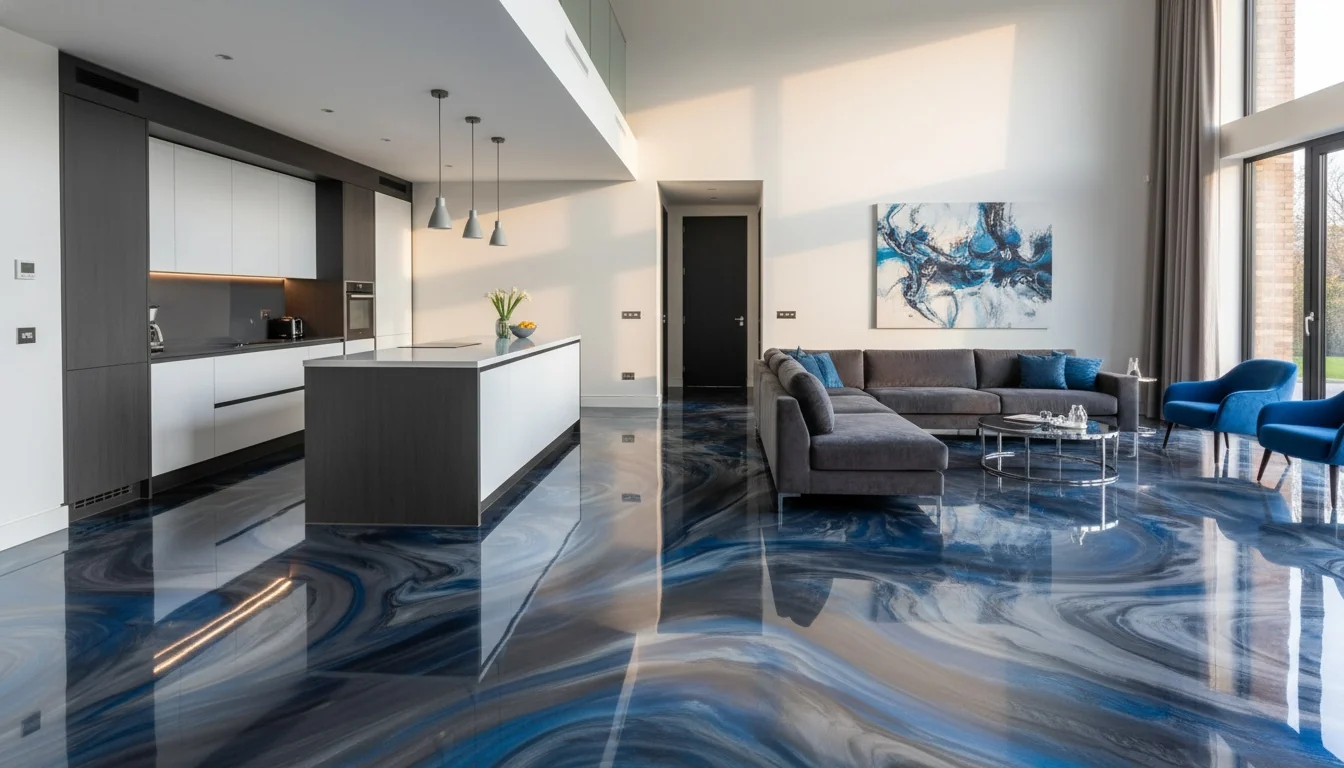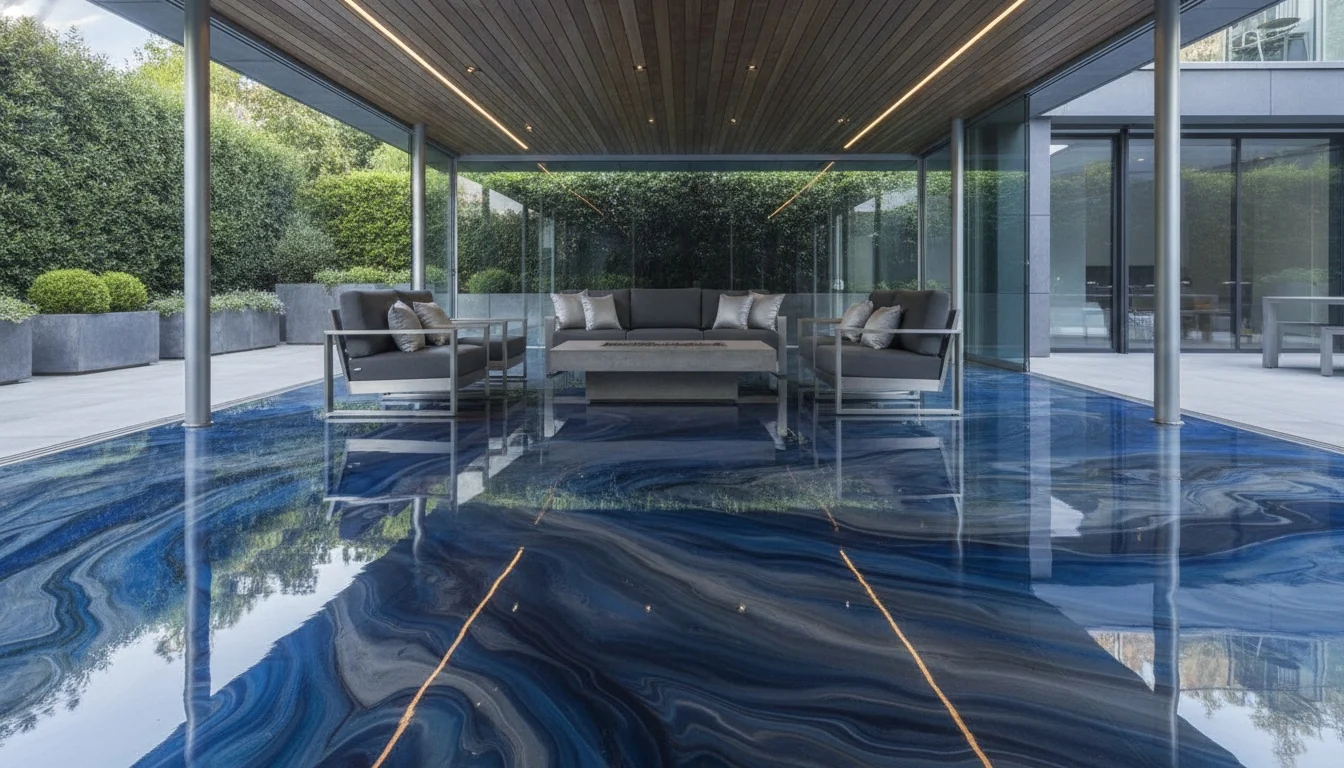

Epoxy floors look fantastic in photos — that seamless, poured, high-gloss finish is hard to argue with. But before you commit, it is fair to ask the honest question: what are the actual pros and cons of epoxy flooring, and are there disadvantages nobody mentions until the floor is down? We lay epoxy floors across Cape Town, so we hear both the praise and the complaints. This is a genuinely balanced look — the real upsides, the real epoxy disadvantages, and how a good installer designs the downsides out.
The short version: epoxy is one of the most durable, hygienic and good-looking floor finishes you can put down, and most of its drawbacks come from cheap product or rushed prep, not from epoxy itself. Get the system and the installer right and the cons mostly disappear.
Key takeaways
- The big pros: extremely durable, seamless and hygienic, great-looking, low-maintenance, waterproof and resistant to most chemicals and everyday heat.
- The real cons: can be slippery when wet, cheaper systems can yellow in direct sun, it must have proper concrete prep or it peels, it needs cure time, it is hard underfoot and it is not a DIY job.
- The catch: almost every con is avoidable with the right system and an experienced applicator — which is the whole point of getting it installed properly.
The pros of epoxy flooring
Epoxy has earned its reputation for good reasons. When it is installed well, the benefits are real and they last.
It is exceptionally durable
A professionally installed epoxy floor bonds to the concrete and forms a hard, impact-resistant surface that shrugs off dropped tools, dragged furniture, foot traffic and car tyres. This is the single biggest reason people choose it for garages, workshops and busy living areas. If you want the full picture, we go deeper into how durable epoxy floors are in a separate guide — but in short, a quality system installed over properly prepared concrete routinely lasts many years.
It is seamless and hygienic
Unlike tiles, epoxy has no grout lines and no joints — it goes down as one continuous surface. Nothing collects in the gaps, there is nowhere for dirt or bacteria to hide, and a quick mop keeps it clean. That seamlessness is exactly why it is the standard choice for kitchens, sculleries, laundries, food-prep areas and commercial spaces where hygiene matters.
It looks the part
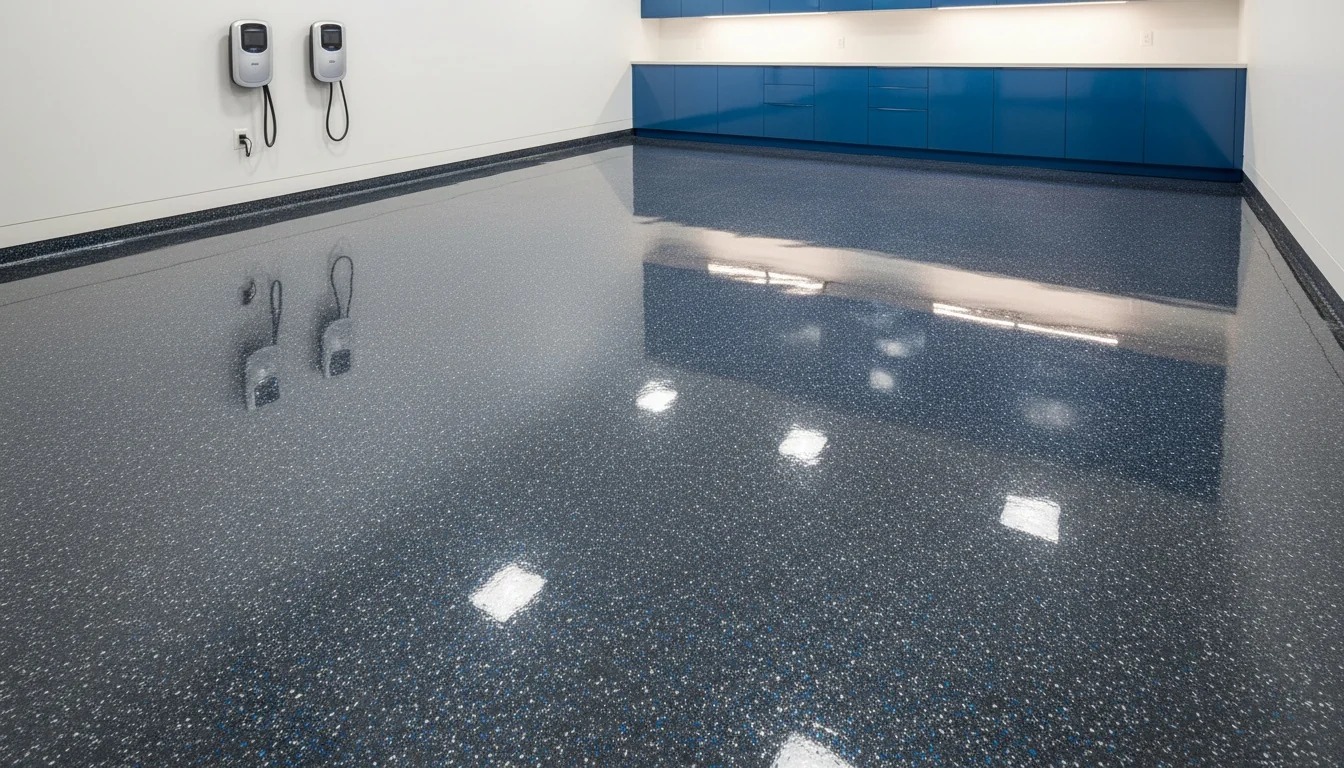
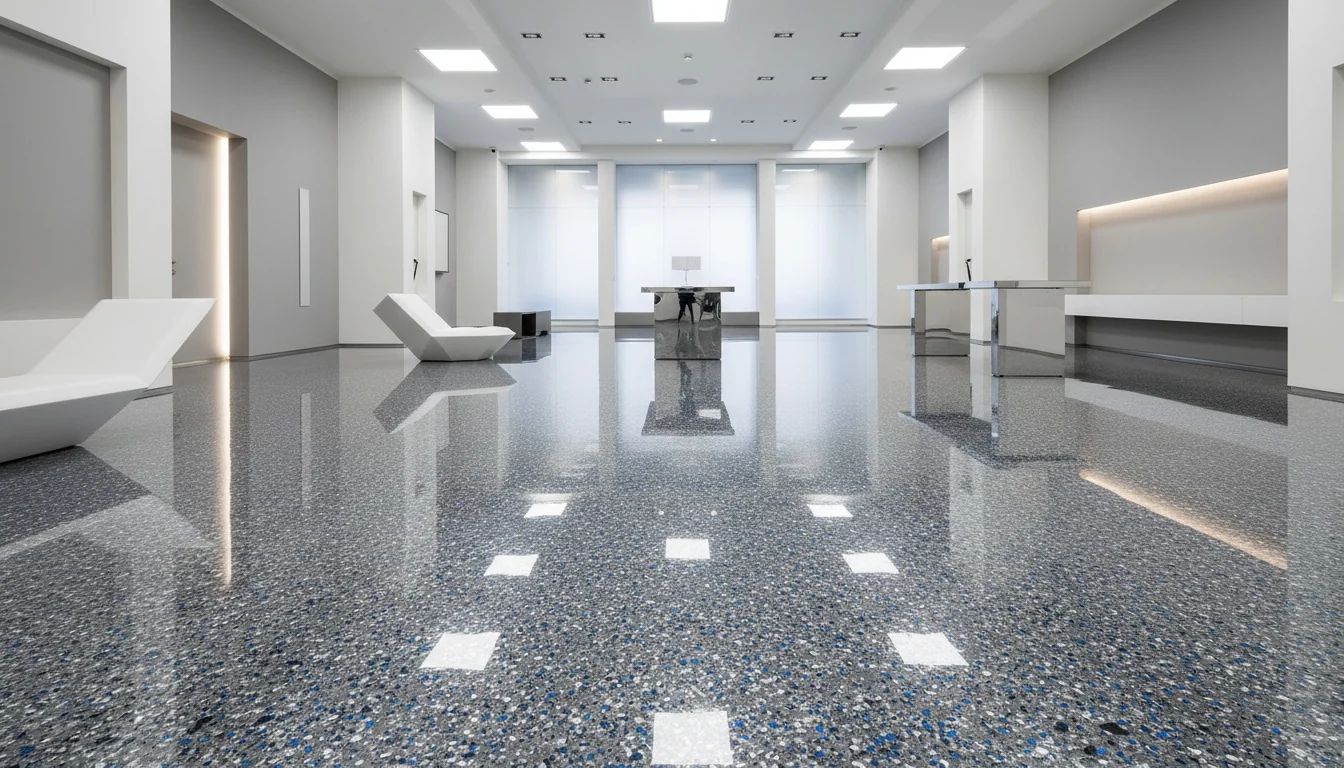
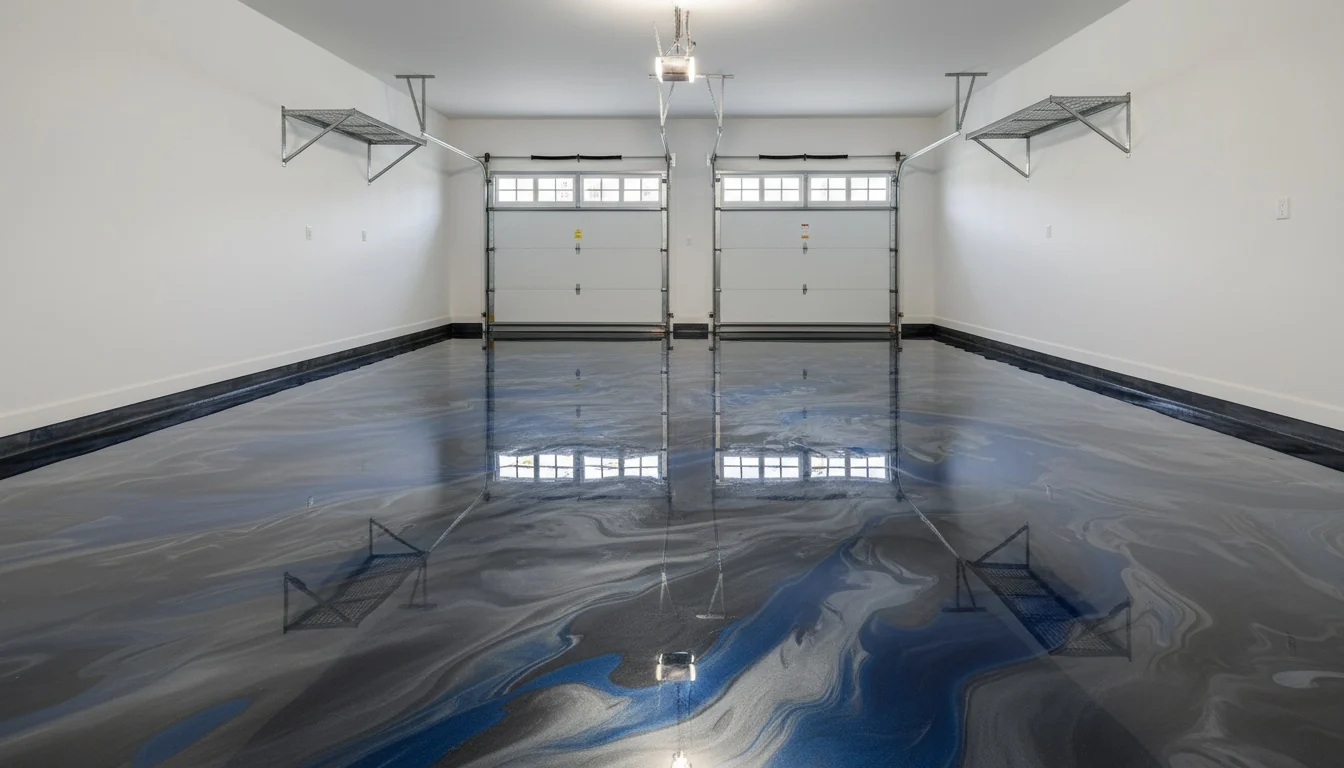
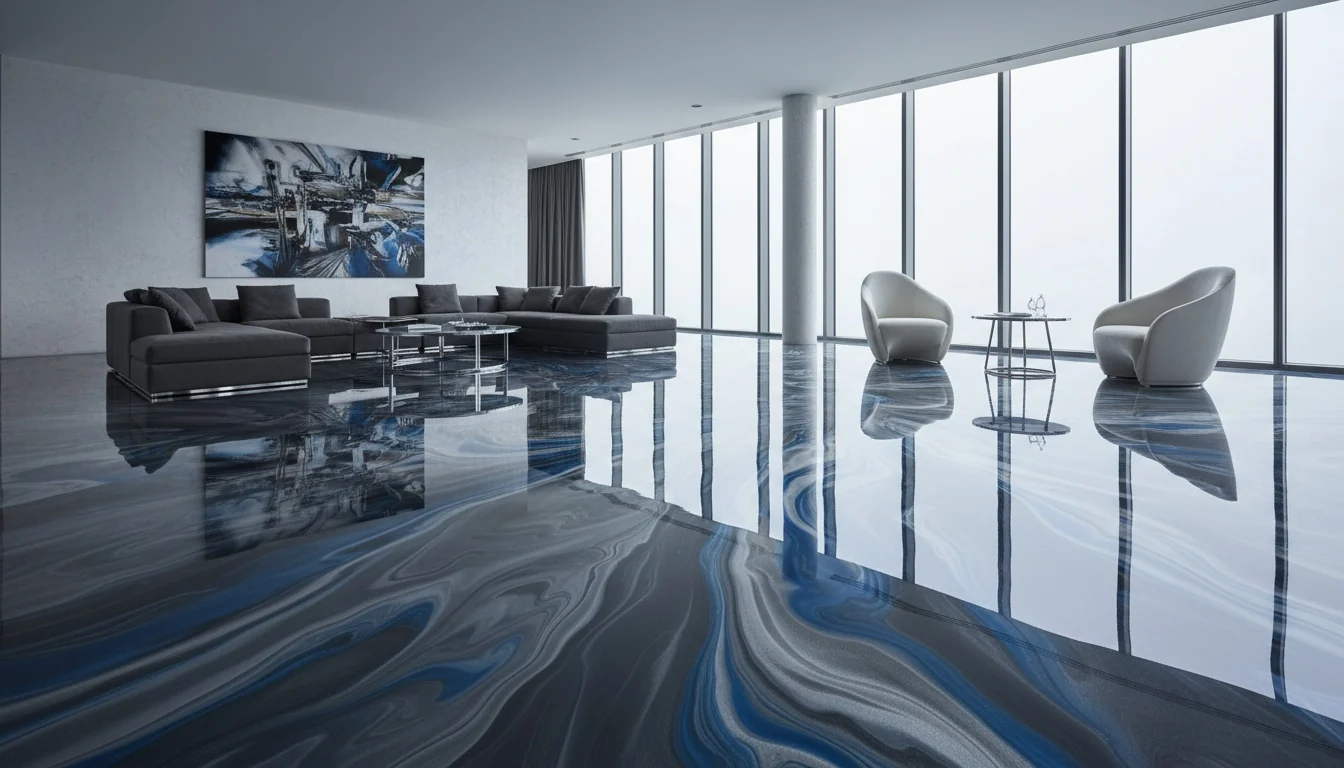
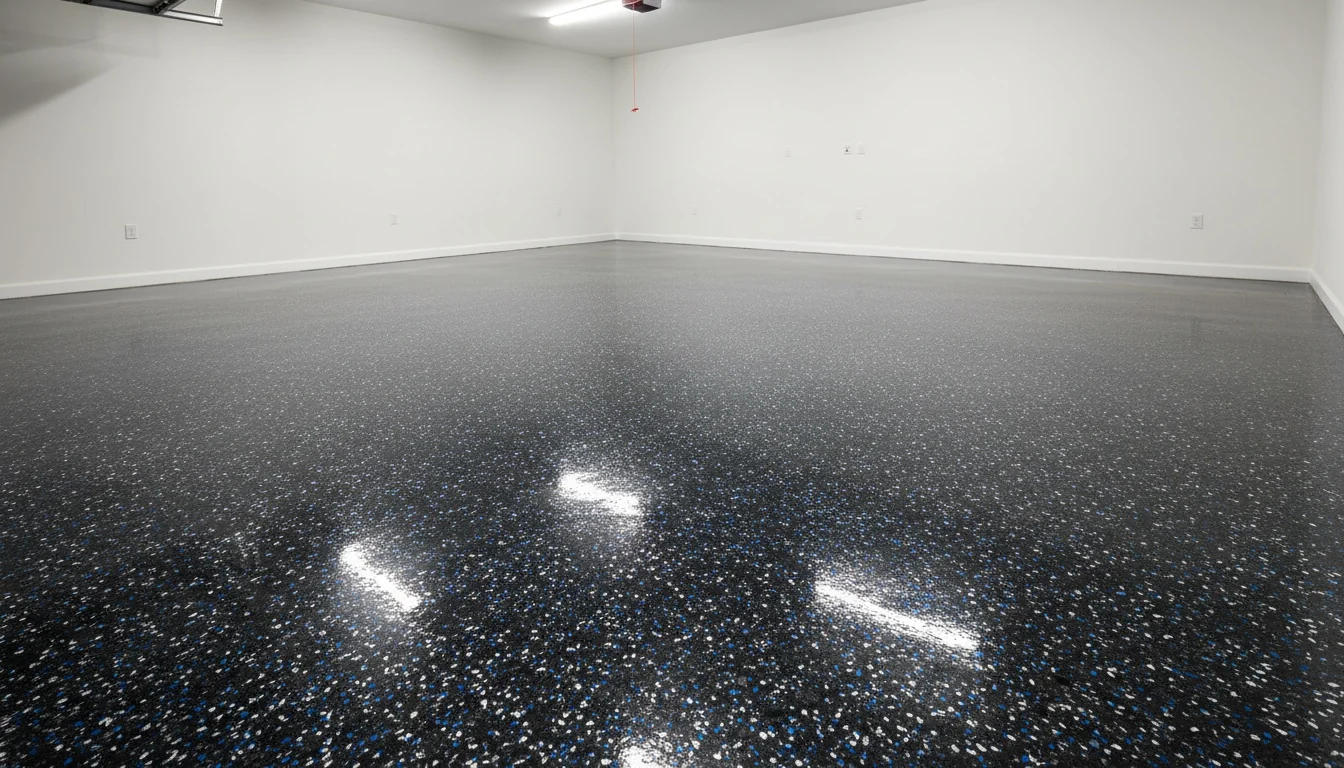
This is where epoxy wins people over. From a deep, marbled metallic floor that reads like polished stone, to a speckled flake-chip garage floor, to a clean solid-colour finish, there is a look for almost any room. The gloss and depth you can achieve are genuinely premium — and the finish is poured to suit your space rather than coming in fixed tile sizes.
It is low maintenance
Once it is down, there is very little to do. No grout to scrub, no sealing of joints, no waxing. A sweep and an occasional mop is the whole routine, which is part of why it pays off over the life of the floor.
It is waterproof
A correctly installed epoxy floor is waterproof. With no joints for water to seep through, spills sit on the surface and wipe straight off — ideal for garages, patios, sculleries and anywhere that sees water. This is one of the clearest practical advantages it has over a tiled floor.
It resists chemicals and everyday heat
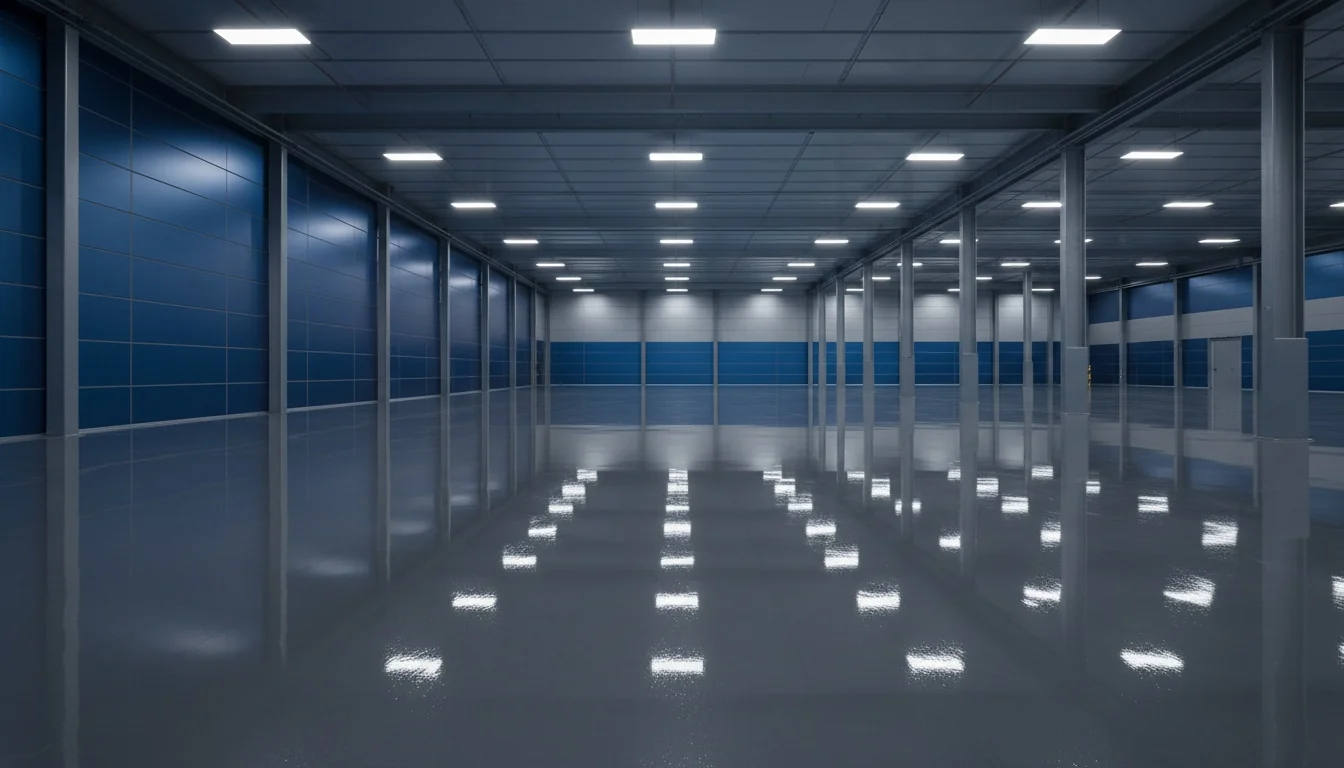
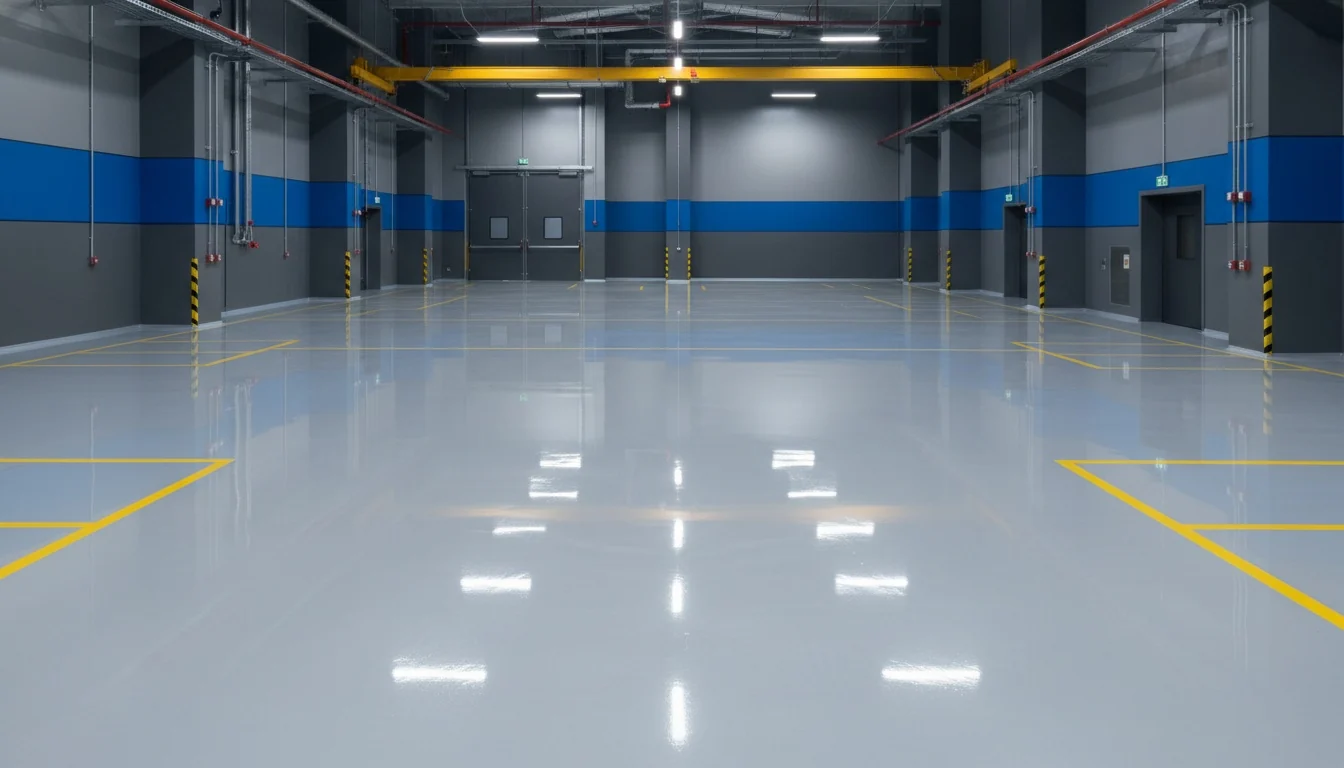
Epoxy stands up well to oil, petrol, household cleaners and the kinds of spills a garage or workshop sees, which is why it is the go-to industrial floor finish. It is also heat resistant for normal use — warm tyres, the odd hot pot, sunlight through a window. It is not fireproof or built for sustained extreme heat, so for areas near a braai or industrial heat source the installer specifies a higher-spec system rated for it.
The cons (and how a good installer avoids them)
Now the honest part. Epoxy does have downsides, and you deserve to hear them straight. The good news is that nearly all of them come down to the product chosen and the quality of the install — so the right installer designs them out before the first coat goes down.
It can be slippery when wet
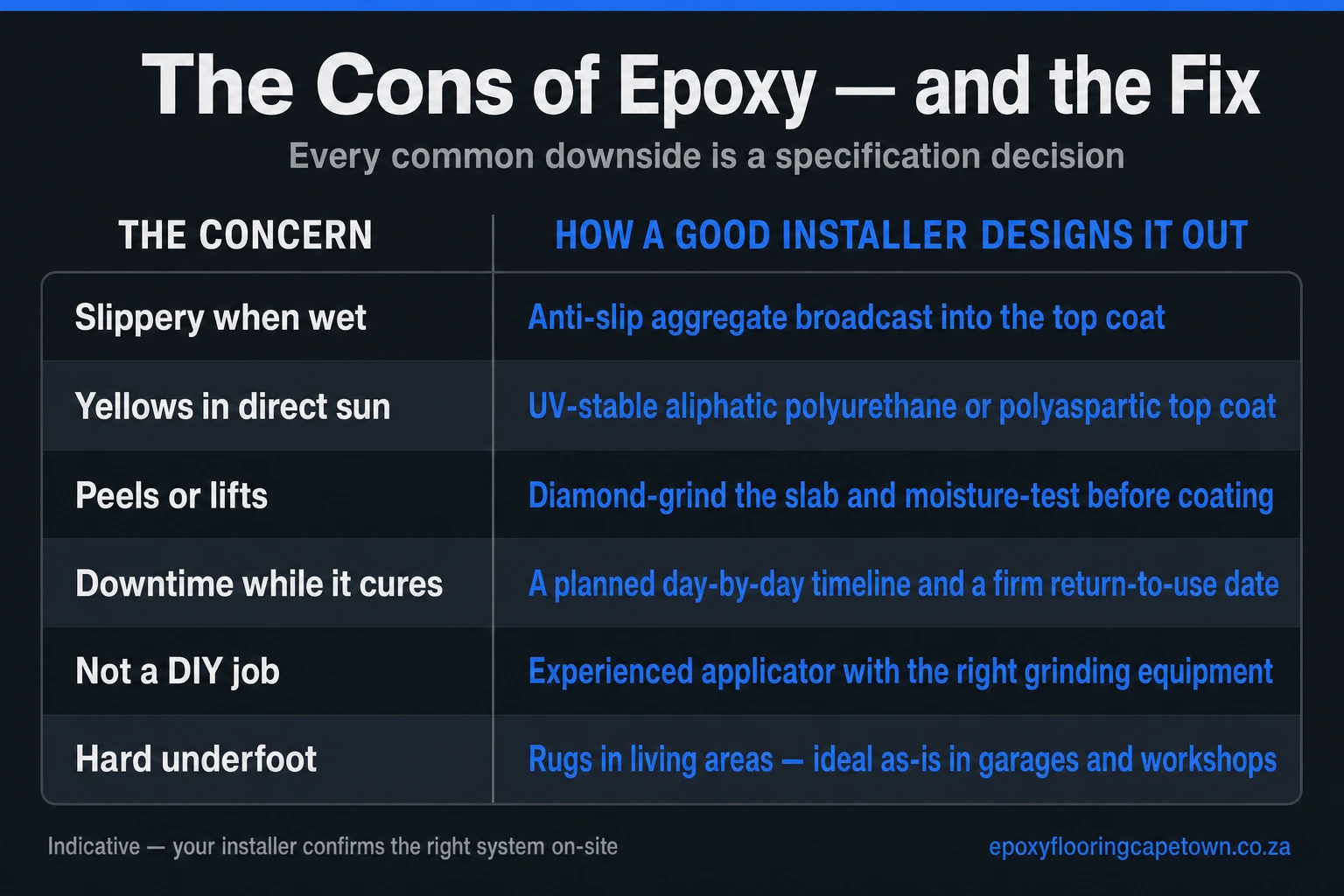
A high-gloss epoxy floor can be slippery once water gets on it — a real concern for patios, pool surrounds, entrances and bathrooms. The fix is simple and standard: an anti-slip additive broadcast into the top coat gives the floor grip without spoiling the look. There is more to it than a single additive, though — slip resistance is measured on its own scale and should be specified room by room. The takeaway is that a good installer adds traction wherever a floor is likely to get wet.

Cheap systems can yellow in the sun
The most common complaint about poor epoxy jobs is yellowing — and it is almost always down to a cheap coating exposed to strong UV or direct sunlight. Standard epoxy resin is not naturally UV-stable. The answer is a UV-stable top coat over it — usually an aliphatic polyurethane or a polyaspartic finish — on any floor that gets real sun, indoors near big windows or outdoors. Specify the right system and yellowing simply is not part of the story.
It needs proper prep or it peels
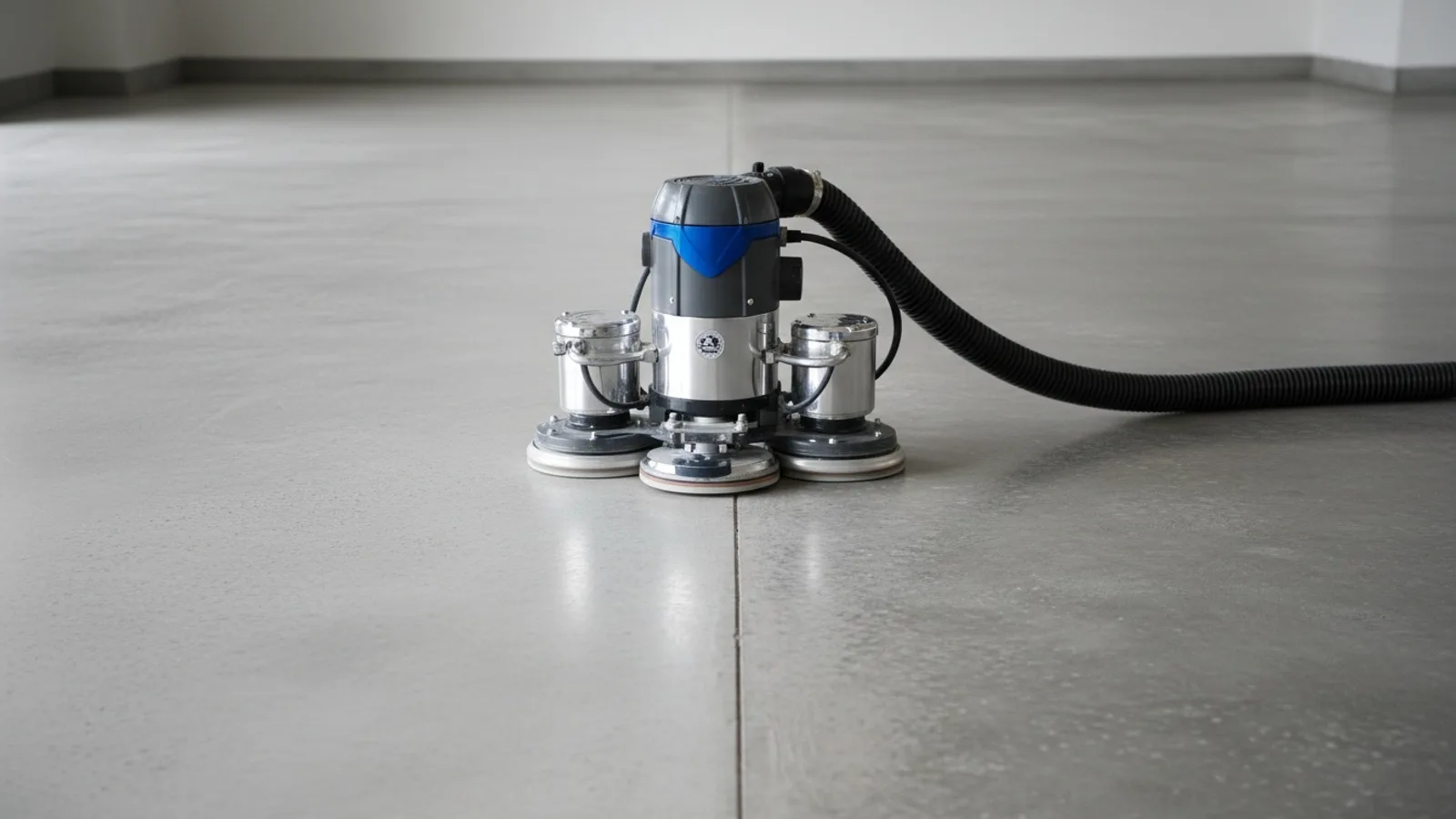
This is the big one. Epoxy is only as good as the concrete underneath it. If the slab is not diamond-ground to the right profile, if cracks are not repaired, or if moisture coming up through the slab is ignored, the coating can lift and peel — sometimes within a year. There are no shortcuts here. Proper prep is exactly what separates a floor that holds for years from one that fails, and it is built into how a professional approaches the job. Ask any installer to walk you through their prep before you accept a quote — how they answer tells you a great deal about the floor you will end up with.
There is cure time and downtime
Epoxy is not instant. Between grinding, repairs, coats and curing, a typical garage is usually a couple of days from start to walk-on, and decorative or multi-coat floors need longer between coats. You cannot rush a cure without weakening the floor. A good installer gives you a clear day-by-day timeline and a realistic return-to-use date up front, so the downtime is planned rather than a surprise.
It is not a DIY-friendly job
The hardware-store epoxy kit is tempting, but this is genuinely not a beginner project. The grinding equipment, moisture testing, mixing ratios and timing all matter, and mistakes show up as bubbles, peeling or an uneven finish that has to be ground off and redone. Most DIY epoxy failures are prep failures. Paying an experienced applicator the first time is almost always cheaper than fixing a botched coat later.
It is hard underfoot
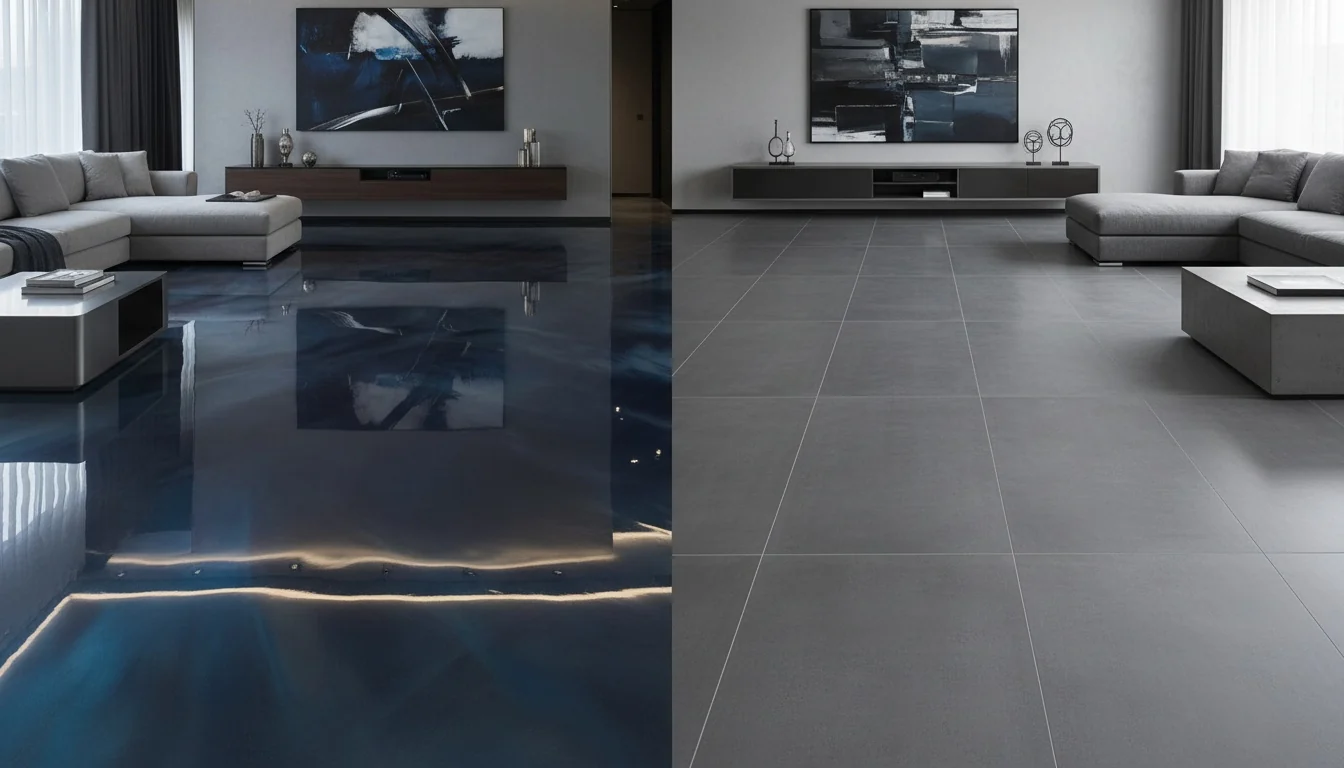
Epoxy is a hard surface. For a garage or workshop that is exactly what you want, but for a room where you stand for long stretches it can feel unforgiving, and dropped glassware will not survive. It is the same trade-off you make with tiles or polished concrete — if you have weighed up epoxy compared with tiles, you will recognise it. A rug in the right spot solves it for living areas.
So is epoxy worth it?
For most Cape Town spaces, yes. Run back through the cons and a pattern is obvious: slipperiness is solved with an anti-slip additive, yellowing with a UV-stable top coat, peeling with proper prep, and a poor finish by not treating it as a DIY job. The downsides are real, but they are the predictable result of cheap product or rushed work — not flaws in epoxy itself. Match the right system to the room and have it installed by someone who knows what they are doing, and you get a floor that is durable, waterproof, hygienic, easy to clean and genuinely good-looking.
Is epoxy good for homes? When the system is matched to the room and installed properly, it is an excellent choice for garages, sculleries, patios, kitchens and open-plan living areas — and it tends to lift the value of the property too. Pricing in Cape Town is typically in the region of R250 to R750 per m² depending on the system and the prep involved; you can see the breakdown on our pricing page.
The honest answer to "what are the disadvantages of epoxy flooring" is that they are almost all avoidable — and the best way to know whether epoxy suits your space is to have an experienced installer look at it. They will assess the concrete, recommend the right system for how the room is used, and give you a firm written quote with no surprises.