
It is the first question almost every Cape Town homeowner asks before committing to an epoxy floor: how long does epoxy flooring last? It is a fair question, because a good epoxy floor is an investment, and you want to know whether you are buying something that holds for a couple of seasons or for the better part of two decades. The honest answer is that it depends — mostly on how the floor is prepared and installed, and partly on how hard you work it afterwards.
In this guide we walk through what "lifespan" actually means for epoxy, realistic year ranges by how the floor is used, and the things that quietly shorten a floor's life — poor prep, moisture, UV, heavy point loads and cheap single-coat systems. We also tackle the questions behind the question: do epoxy floors scratch, do epoxy floors crack, and do epoxy floors yellow over time? And, just as importantly, what you can do to get the longest possible life out of the floor you pay for.
Key takeaways
- A professionally installed epoxy floor commonly lasts 10–20 years in a home and around 5–10 years under heavy industrial use — these are realistic ranges, not guarantees.
- Preparation is the number-one factor. Diamond grinding, moisture testing, crack repair and the right primer matter more than the brand on the tin.
- Epoxy can scratch and can crack, but both are usually repairable — and a worn floor can be recoated rather than ripped out.
- Standard epoxy can yellow in direct sun; a UV-stable topcoat solves it where sunlight is unavoidable.
What "lifespan" really means for an epoxy floor
When installers talk about how long epoxy lasts, they are really talking about two different things. The first is how long the coating stays bonded to the concrete — does it hold fast, or does it start to lift, bubble and peel? The second is how long it stays looking good — keeping its gloss, colour and even surface before it dulls, scuffs or yellows. A floor can be structurally sound long after it has lost its showroom shine, and a tired-looking floor is usually a recoat job, not a failure.
So when you ask whether epoxy floors last, the useful answer is layered. A properly installed system can stay bonded and protective for 10, 15, even 20 years in the right setting. The decorative top layer might want a refresh sooner than that if it lives under heavy traffic or strong sun — but that is maintenance, not the floor failing.
Typical epoxy lifespan by how the floor is used
The single biggest variable in epoxy lifespan is what the floor has to put up with day to day. A gently used home interior and a busy mechanical workshop are worlds apart. The table below gives indicative ranges for a properly prepared, professionally installed floor — treat them as realistic expectations, not guarantees, because prep quality and care swing the numbers either way.
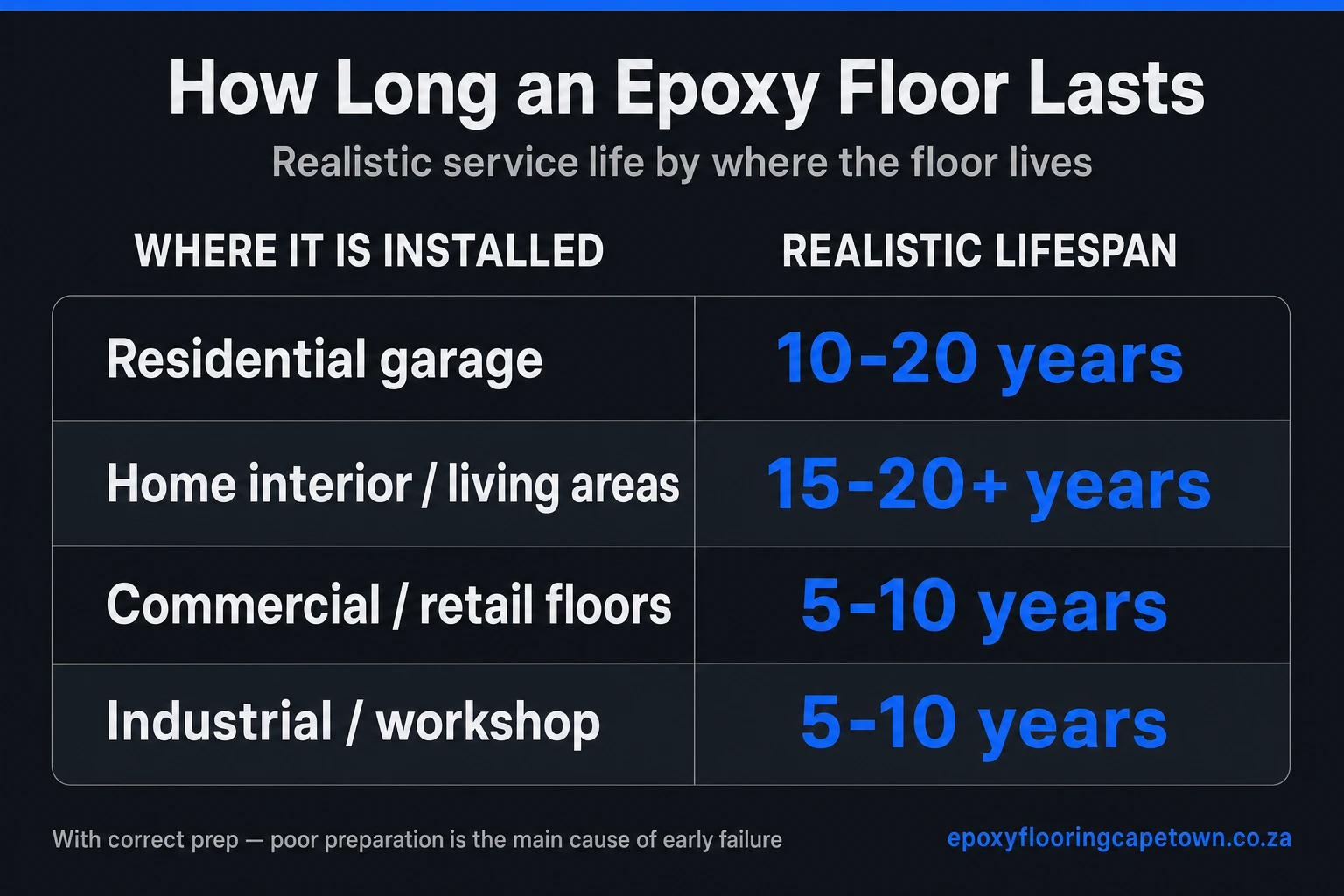
| Where it is used | Indicative lifespan | What drives the range |
|---|---|---|
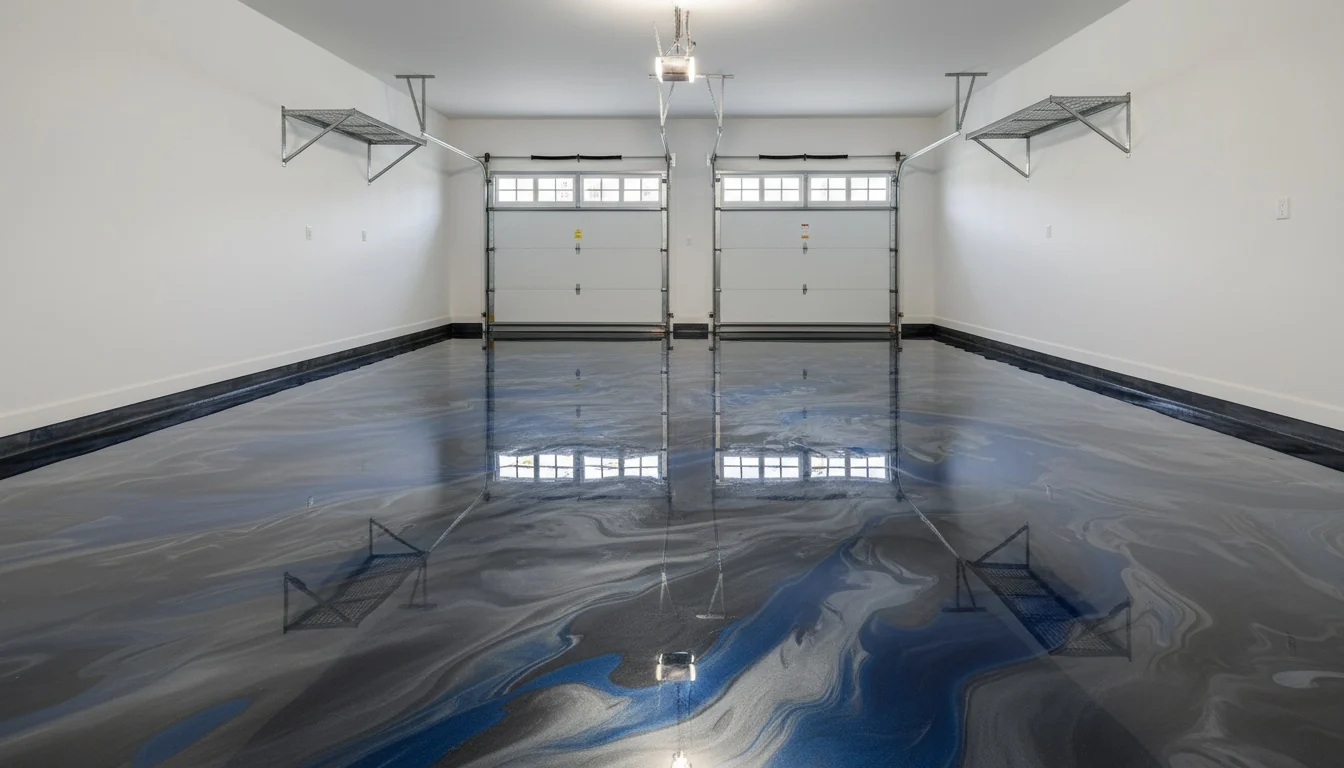
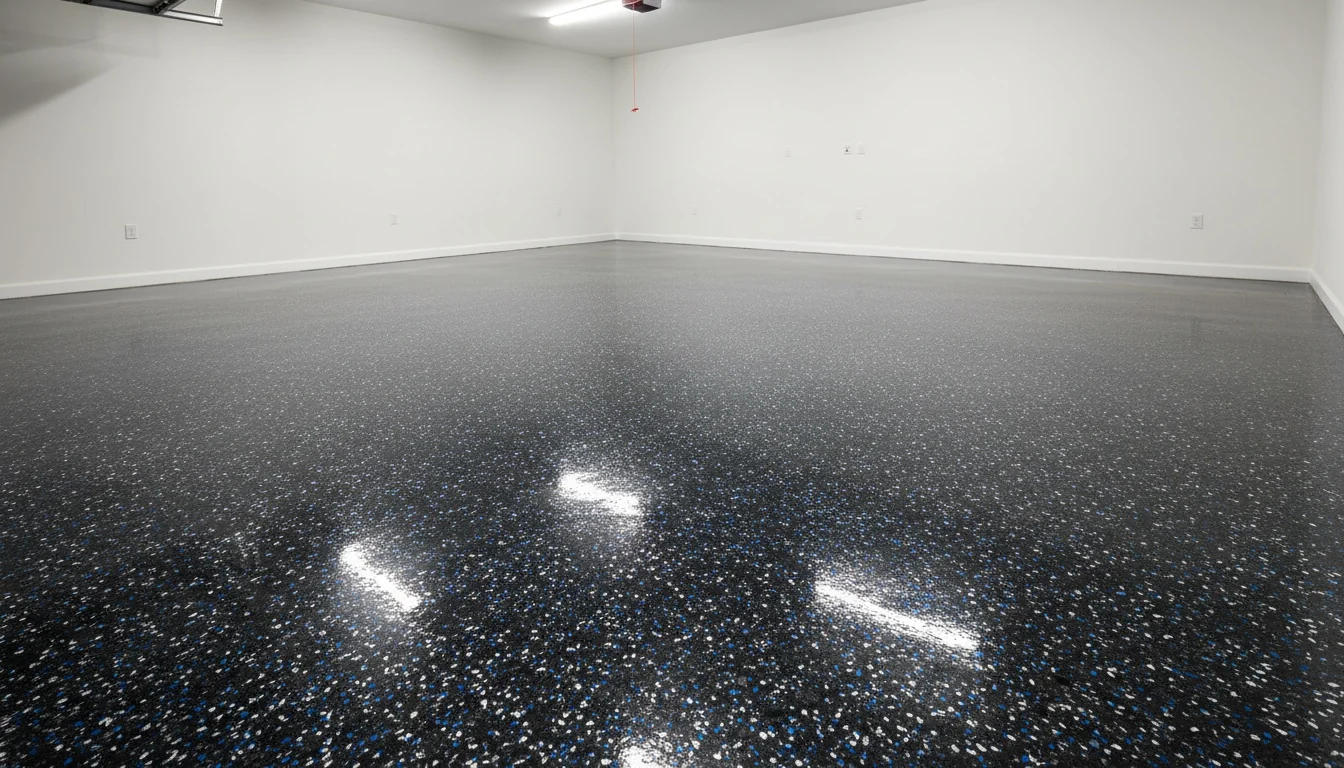
| Residential garage | 10–20 years | Vehicle traffic, tyre marks, the odd dropped tool |
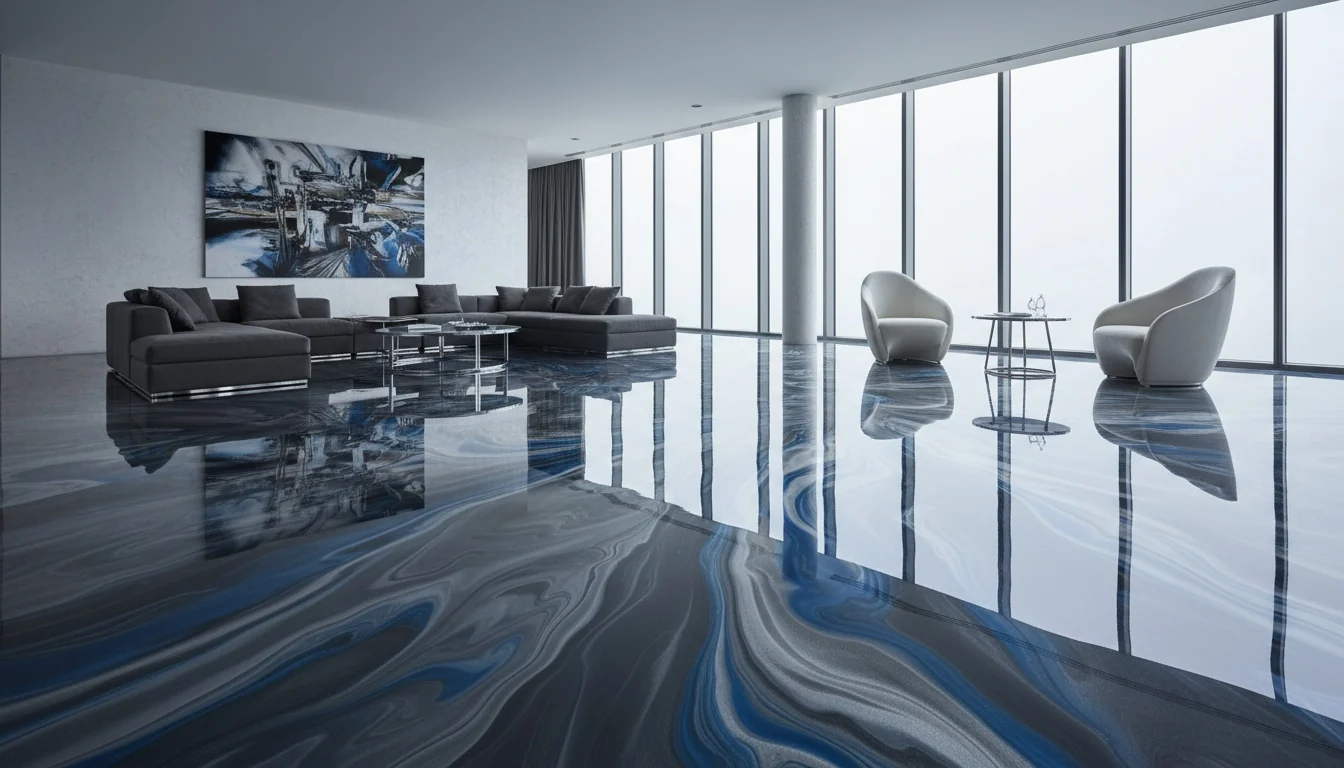
| Home interior / living areas | 15–20+ years | Light foot traffic; indoors and out of direct sun |
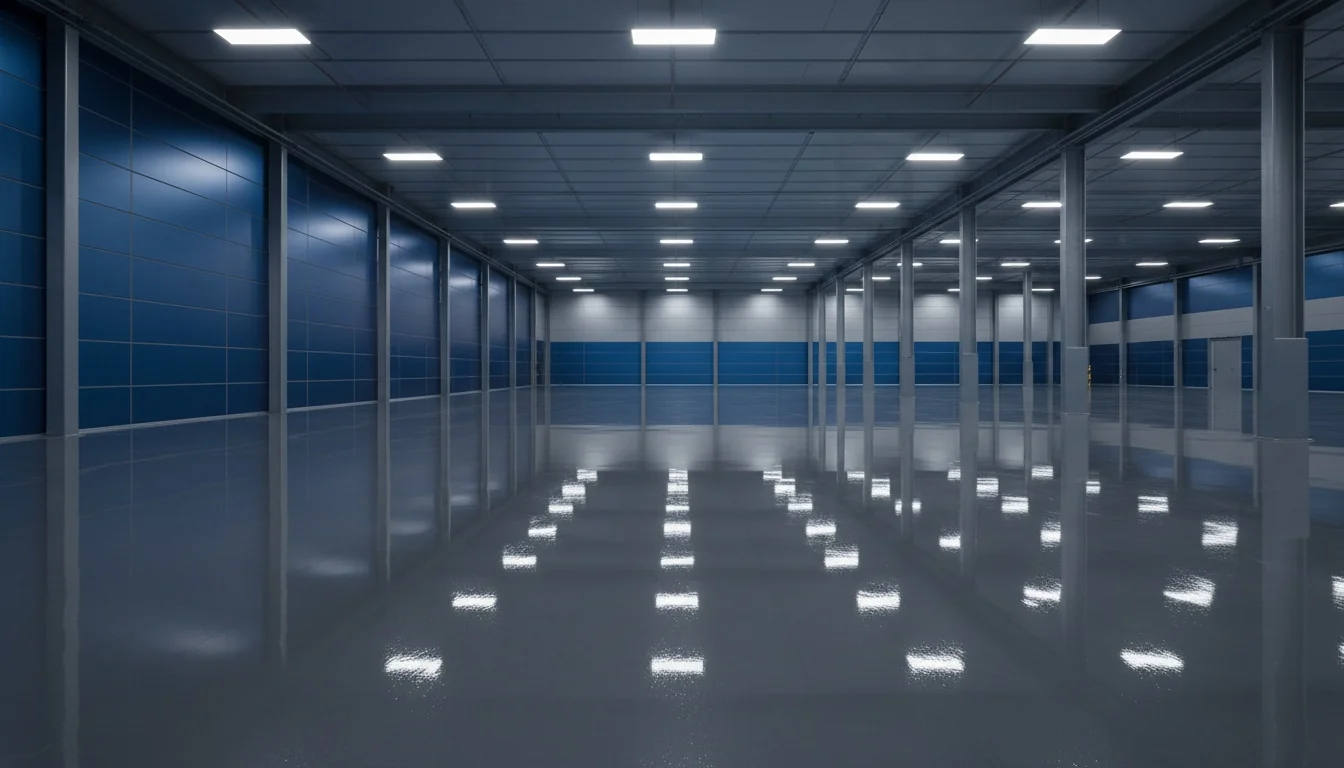
| Commercial / retail floors | 5–10 years | Constant foot traffic, trolleys, cleaning regimes |
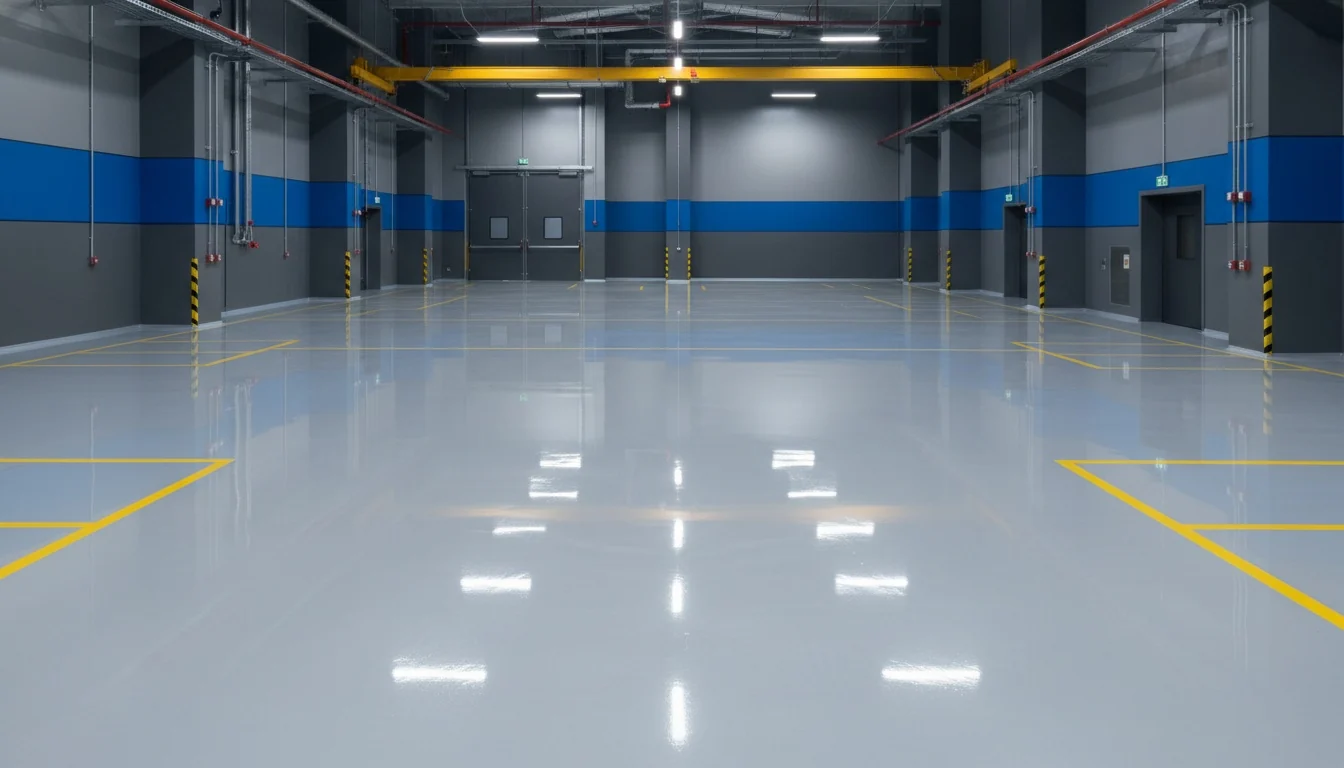
| Industrial / workshop | 5–10 years | Forklifts, point loads, chemicals, heavy abrasion |
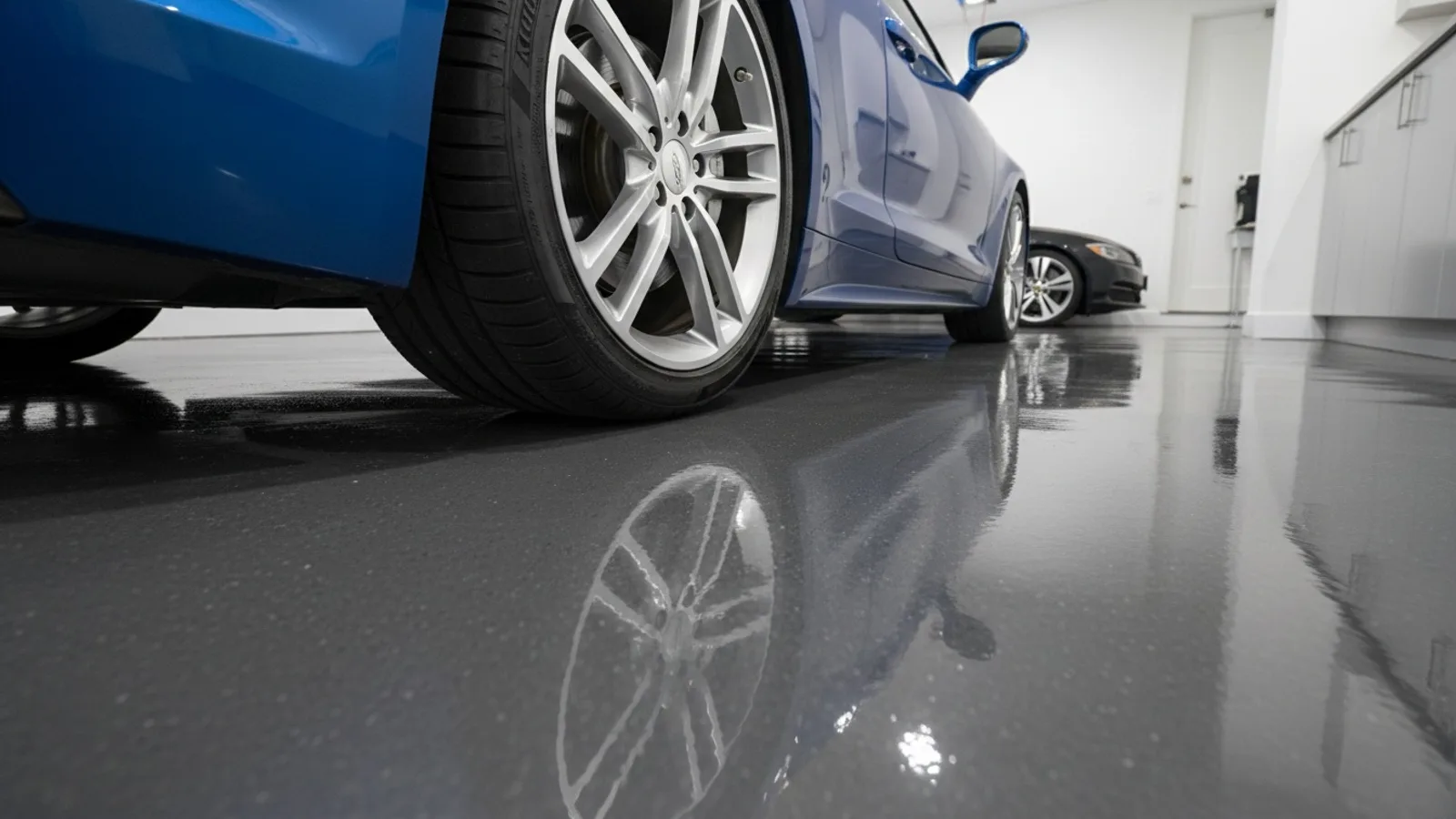
Notice that a home interior often outlasts a garage, simply because it sees gentler use. A garage floor epoxy works harder — hot tyres, jacks and grit all take their toll — but a flake or quartz garage system is built for exactly that and still gives you well over a decade when it is laid properly.
What shortens an epoxy floor's life
Most epoxy floors that fail early do not fail because of the resin. They fail because of what happened — or didn't happen — before and underneath the coating. These are the usual culprits.
Poor surface preparation
This is the big one. Epoxy bonds mechanically to concrete, and it can only grip a surface that has been opened up properly. Painting epoxy over a smooth, sealed or dusty slab is the classic route to a floor that peels within a year. Proper prep means diamond grinding the concrete back to a clean, slightly rough profile so the coating keys in and stays put.
Moisture coming up through the slab
Cape Town's older homes and ground-level slabs can push moisture vapour up from below. If that moisture is not tested for and managed with a suitable primer or moisture barrier, it builds pressure under the coating and lifts it off in patches. A quick moisture test before quoting saves a world of trouble later.
UV exposure and yellowing
Standard epoxy is not naturally UV-stable. Under constant direct sunlight the resin can amber or yellow over time — most noticeable on white and pale-grey floors near big windows, glass doors, or anywhere outdoors. It is a cosmetic issue rather than a structural one, but it is real, which is why the topcoat choice matters so much for sun-exposed areas.
Heavy point loads and abrasion
Epoxy handles spread-out weight well, but concentrated point loads — a jack stand, a heavy shelving leg, a forklift wheel — can dent or chip even a hard floor. Constant grit being ground underfoot acts like sandpaper and dulls the surface over years. This is why industrial floors sit at the lower end of the lifespan table.
Cheap, single-coat systems
Not all "epoxy" is equal. A thin, single-coat DIY-grade product simply does not have the film build to last like a professional multi-coat system of primer, body coat and topcoat. It is one of the downsides too of going cheap — the upfront saving disappears the first time the floor needs redoing years ahead of schedule.
Do epoxy floors scratch and crack?
Two of the most common worries, and both deserve a straight answer. Yes, epoxy floors can scratch, and yes, epoxy can crack — but neither is the disaster people fear, and both are usually fixable.
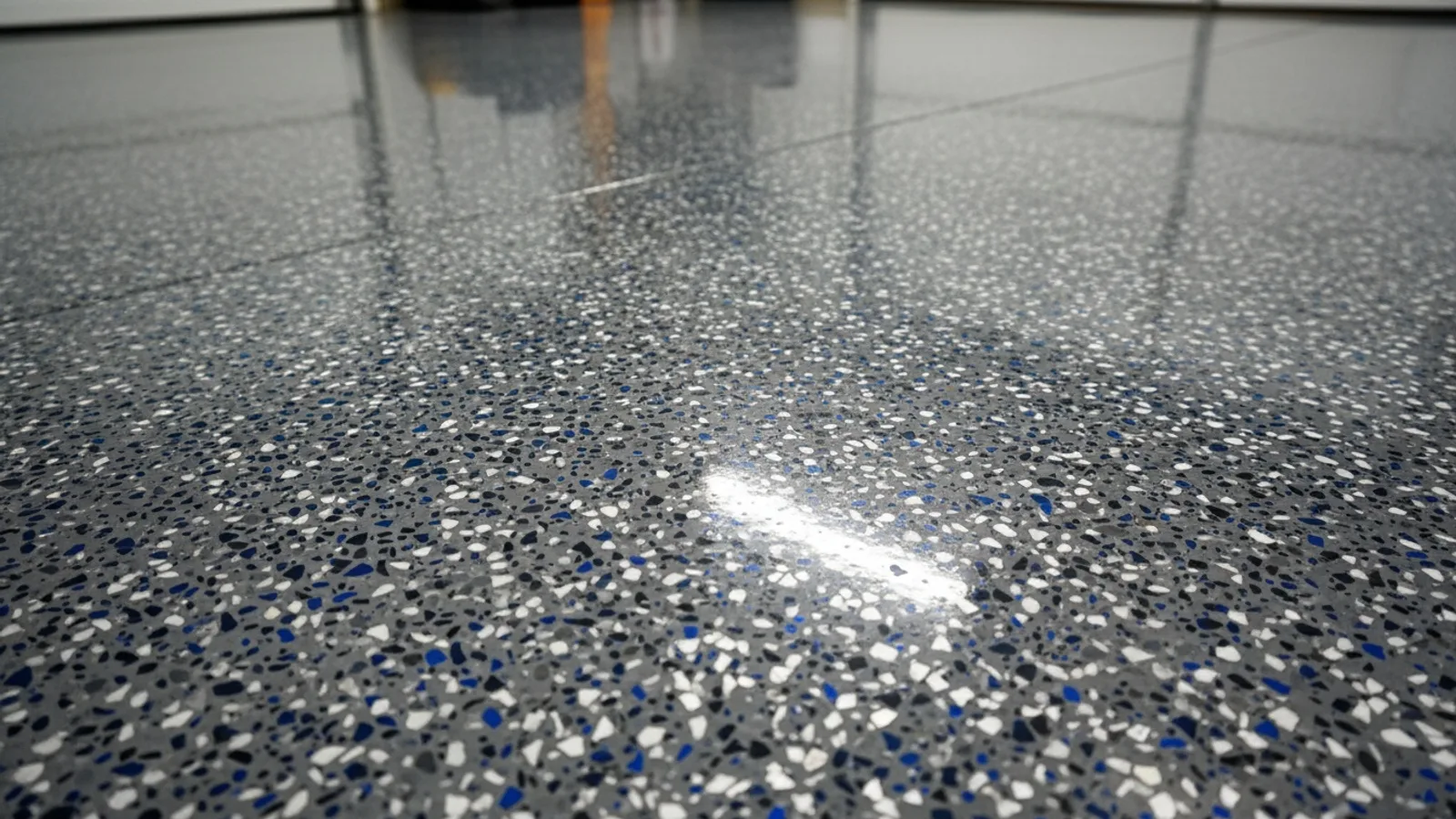
On scratching: cured epoxy is genuinely hard and shrugs off the everyday knocks that would scuff paint or bare concrete. But dragging steel furniture, heavy toolboxes or grit across it will leave marks eventually, and high-gloss finishes show those marks more readily than matte or flake ones. The good news is that light scratches can often be buffed out, and a scuffed floor can be given a fresh topcoat to look new again. If you want to keep scratches invisible, a finish examples page is worth a look — flake and quartz blends hide day-to-day wear far better than a mirror finish.
On cracking: does epoxy flooring crack? The coating itself is rigid, so when you see a crack it is almost always the concrete underneath that has moved — settlement, a pre-existing crack that was not repaired, or moisture pressure. A floor where cracks were routed out, filled and primed before coating is far less likely to crack. And when a crack does appear, the installer can usually rout it open, repair it and re-coat that section rather than redo the whole floor.
Do epoxy floors yellow over time?
Epoxy yellowing is real, and it is worth understanding so you are not caught out. Standard epoxy resin can yellow — amber, slightly — when it lives under strong, constant UV light. So do epoxy floors yellow over time? In a shaded indoor space, generally no, not in any way you will notice for years. Right next to a sun-blasted glass door, or outdoors, a standard white epoxy can shift colour over time.
The fix is straightforward: where sunlight is unavoidable, the installer specifies a UV-stable topcoat — typically a polyurethane layer over the epoxy — that resists yellowing and protects the colour underneath. Choosing a mid-tone or flake finish rather than stark white also makes any slight colour shift far less obvious. The point is that epoxy yellowing is predictable and designed around, not a surprise you have to live with.
Why professional prep is the number-one factor
If there is one thing to take from this whole guide, it is this: how long your epoxy floor lasts is decided before the colour coat ever goes down. The same litre of resin can give you twenty years or two, depending entirely on the groundwork beneath it. That is why we spend real time on the groundwork rather than handing you a tin and a roller.
The prep that makes a floor go the distance looks like this:
- Diamond grinding the slab to a clean, open profile so the epoxy keys in mechanically and cannot peel.
- Moisture testing the concrete and using the correct primer or barrier where vapour is a risk.
- Crack and joint repair — routing out, filling and reinforcing existing cracks so they do not telegraph through the new floor.
- The right primer and topcoat for the conditions, including a UV-stable topcoat anywhere sunlight reaches the floor.
None of this is glamorous, and it is the part a cut-price job skips to save a day. But it is the whole difference between a floor that lasts and one that lets you down. We do the grinding, testing and repairs as part of the quote, so the durability is built in from the slab up. If you want a sense of where pricing lands for a properly prepped system, our pricing guide sets out the indicative R250–R750 per m² range.
How to make your epoxy floor last longer
Once a floor is down and cured, keeping it in good shape is genuinely easy — and a little care adds years to its life. A few habits make all the difference:
- Sweep or dust-mop regularly. Grit is the enemy; getting it off the floor stops it grinding the surface dull.
- Wipe spills reasonably promptly — oil, chemicals and harsh solvents are best not left to sit, especially on garage and workshop floors.
- Use felt pads or a mat under heavy furniture legs, jack stands and shelving to spread point loads and avoid dents and scratches.
- Avoid dragging heavy steel items across the floor — lift or use a trolley with soft wheels.
- Recoat before it is desperate. A fresh topcoat every several years on a busy floor keeps the protective layer intact and the gloss fresh for a fraction of a re-install.
For wet areas, the same care that protects the floor also keeps it safe underfoot — and where grip matters, non-slip finishes are worth planning in from the start rather than retrofitting later.
The bottom line
So, how long does epoxy flooring last? Realistically, ten to twenty years in a home and around five to ten under heavy industrial punishment — with the spread driven almost entirely by how well the floor was prepared and how it is cared for. Epoxy can scratch and can crack, and standard resin can yellow in the sun, but every one of those is predictable, designed around by a good installer, and repairable rather than fatal. Get the prep right, choose the correct system for the space, look after it sensibly, and an epoxy floor will quietly do its job for many years. When you are ready, we'll measure on-site, advise on the right system for your conditions and give you a firm written price — at no cost to you.