
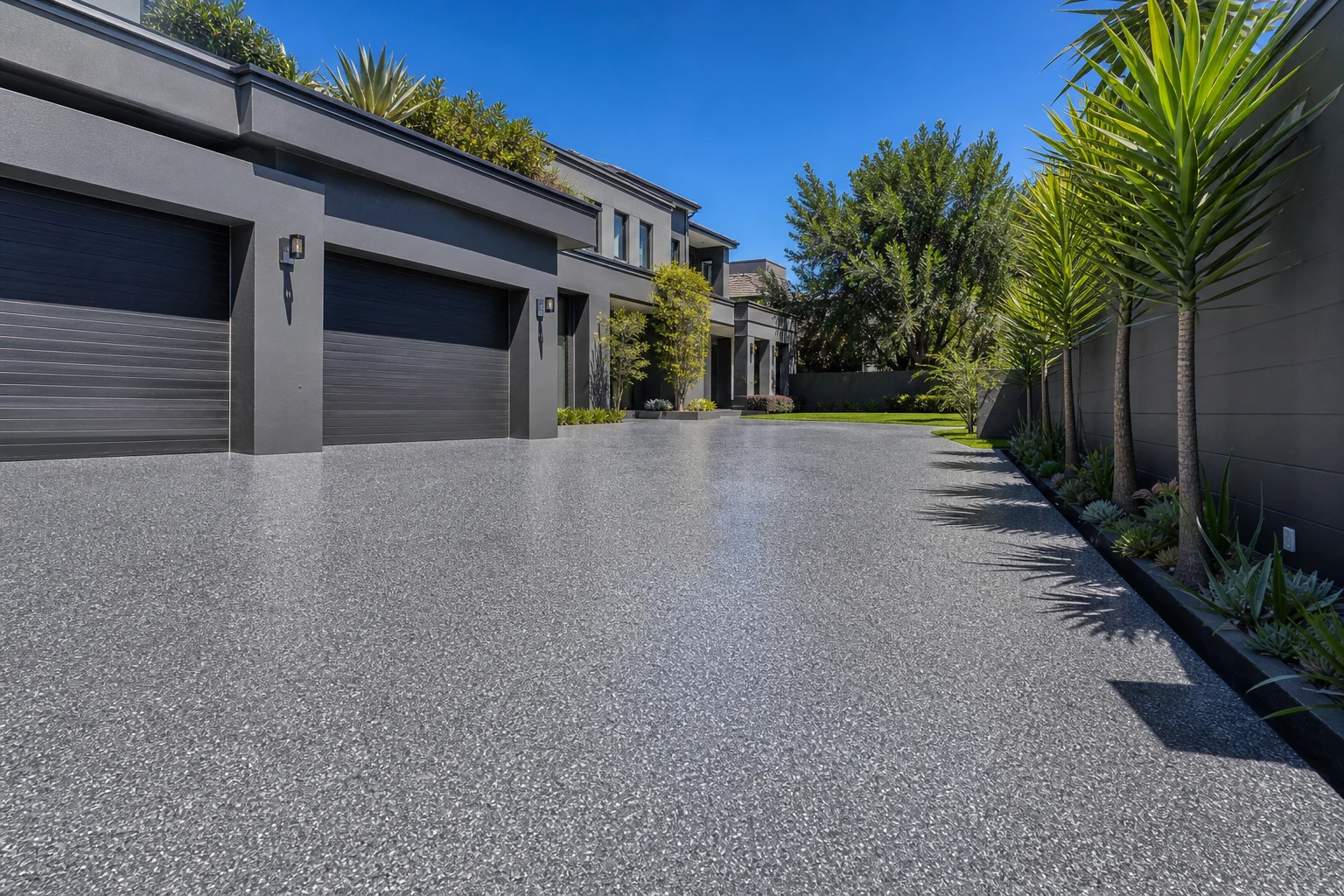
An epoxy driveway is one of the most-requested outdoor upgrades we hear about in Cape Town — and it is also one of the easiest to get wrong. The seamless, high-gloss look that works so well in a garage is tempting to carry straight out to the driveway, but the moment a coating leaves the shade and meets full sun, hot tyres and winter rain, the rules change. The honest answer is that you can have a beautiful, hard-wearing epoxy driveway — but only if it is specified for the outdoors from the start. Lay the wrong system and you will be re-doing it within a season.
This guide walks through what actually works outdoors, where standard epoxy lets people down, and what to ask for so your driveway looks right for years rather than months.
Key takeaways
- Yes, you can epoxy a driveway — but a standard indoor epoxy is the wrong product. Outdoors needs a UV-stable system.
- Plain epoxy yellows in direct sun. Cape Town's strong UV ambers and chalks an unprotected coating.
- Hot tyre pickup is the classic failure — warm tyres peel a soft or poorly prepped coating off the slab.
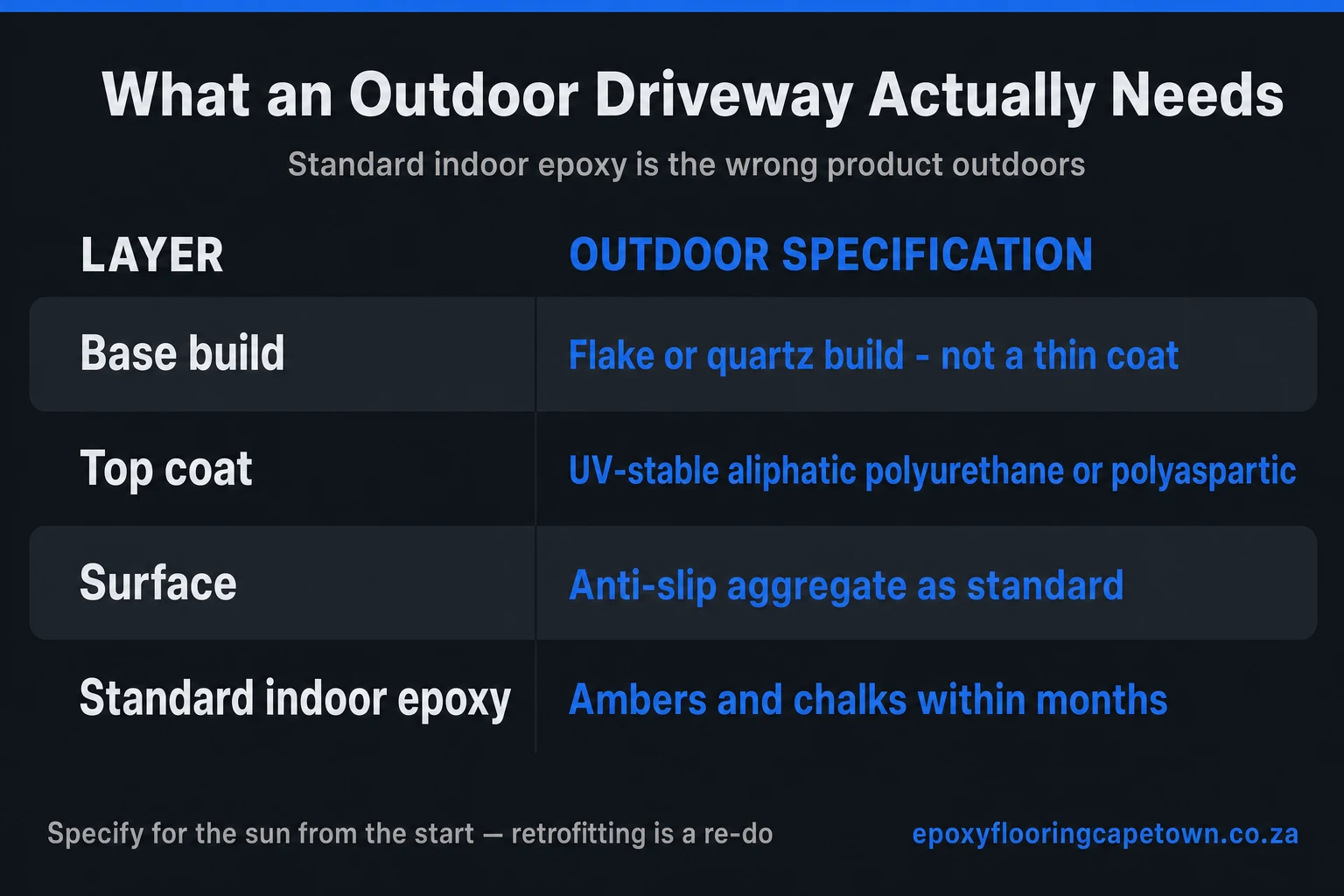
- The fix is a UV-stable topcoat — an aliphatic polyurethane or a polyaspartic over a flake or quartz build.
- It must be non-slip when wet. An anti-slip additive is essential on a sloped, rain-exposed driveway.
- Prep is everything outdoors — moisture, cracks and oil in the slab must be sorted before any coating goes down.
Can you epoxy a driveway?
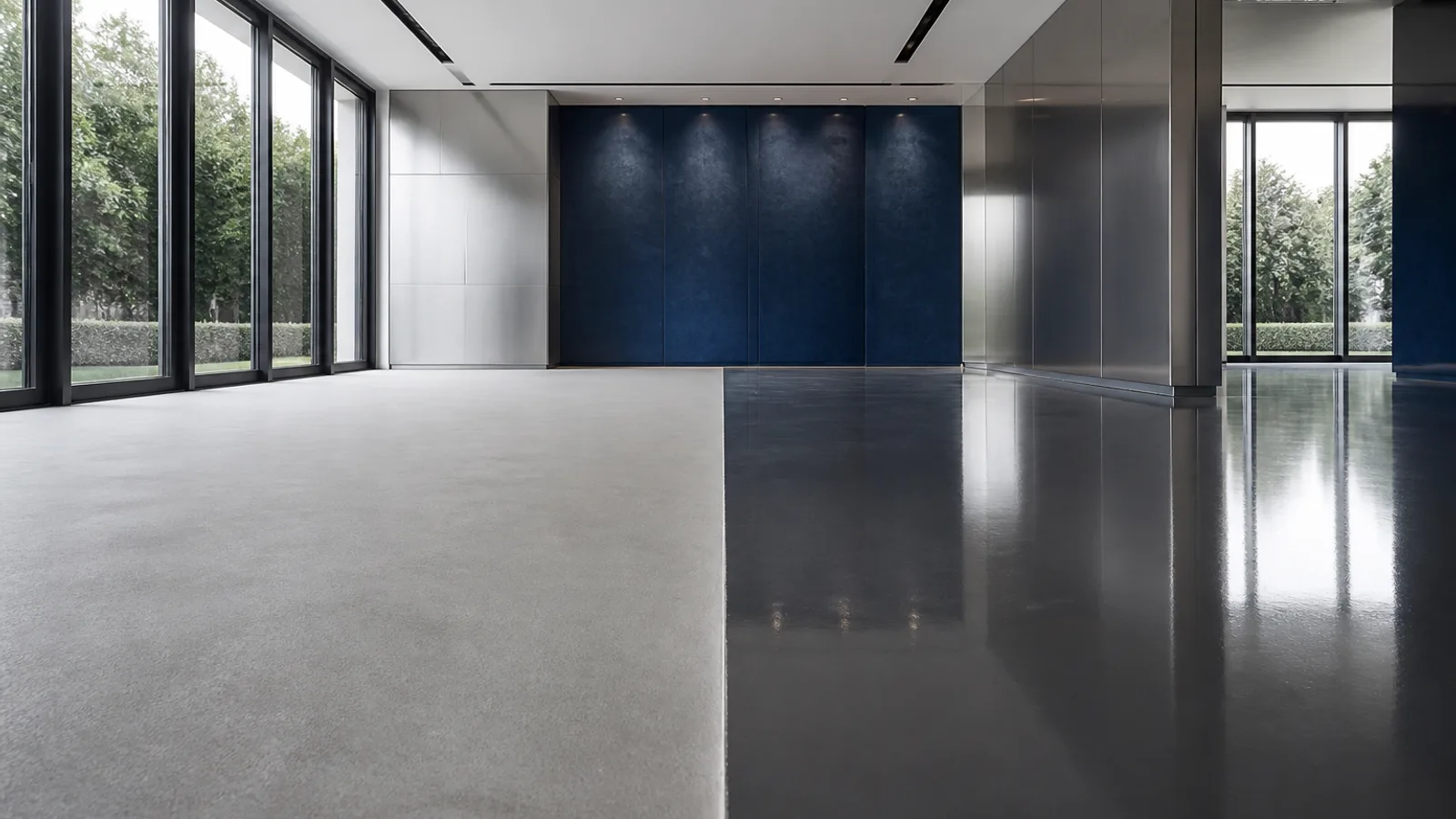
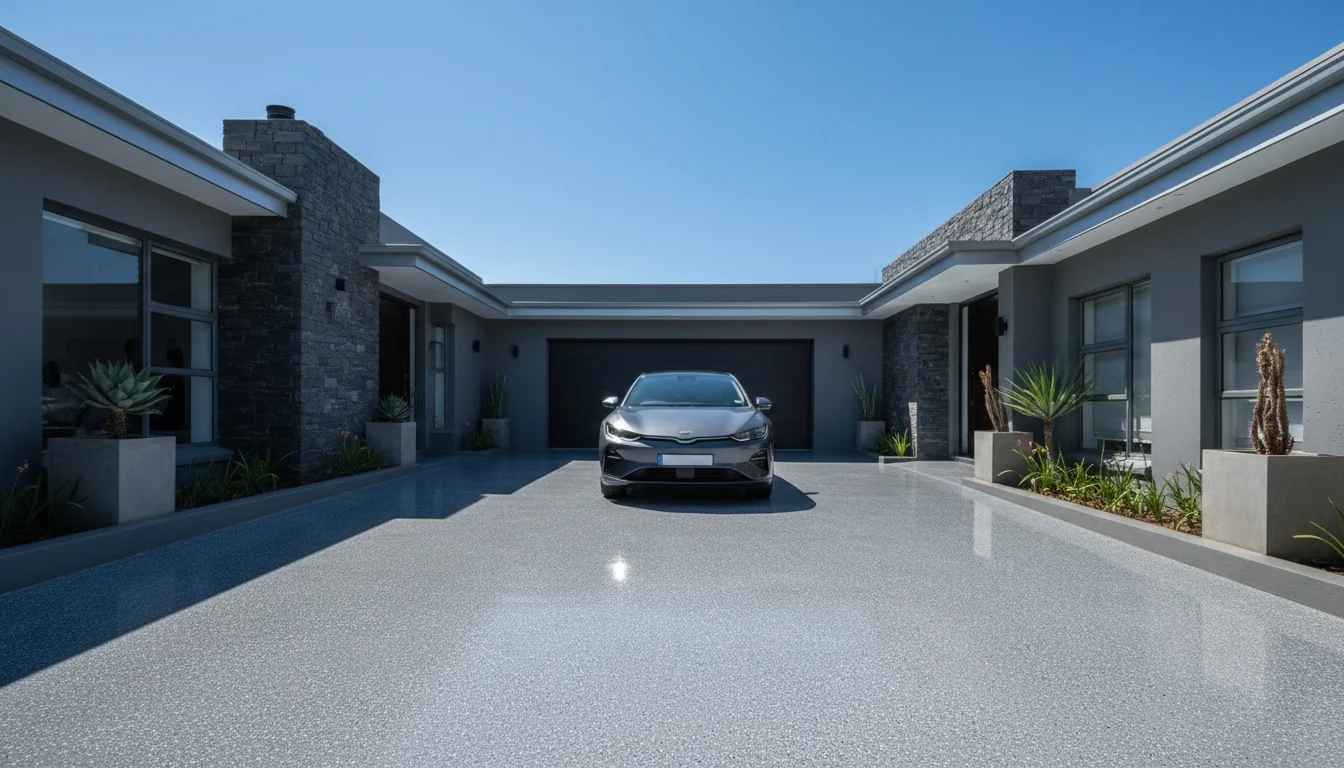
Yes — with the right system. The confusion comes from treating "epoxy" as a single product. The epoxy resin that gives a garage floor its tough, seamless base is genuinely strong, but on its own it is not built for the outdoors. What makes an epoxy driveway work is not the epoxy alone but the whole build: a properly prepared slab, an epoxy base or a decorative flake or quartz layer, and a UV-stable protective topcoat over the top. Think of the epoxy as the body and the topcoat as the armour. Skip the armour and the body corrodes in the Cape sun.
So when someone says "epoxy doesn't last outside," they are usually right about a bare indoor epoxy and wrong about a correctly specified outdoor epoxy. The difference is entirely in the specification.
The challenges of an epoxy driveway
A driveway is a far more demanding environment than a garage, and it is worth being clear-eyed about the three things that catch people out.
UV and yellowing in direct Cape sun
Cape Town gets a lot of strong, direct sun. Standard epoxy resin is not UV-stable, so an exposed epoxy surface slowly turns yellow (ambering) and goes dull and powdery (chalking) over months. You see this most on lighter colours and clear coats. This is a chemistry limit, not a quality problem — it is simply what bare epoxy does in sunlight, which is why a UV-stable coating on top is non-negotiable outdoors.
Hot tyre pickup
Car tyres get hot on a drive and stay pressed against the surface when parked. Standard epoxy can soften just enough that, as you pull away, the coating lifts off the slab and sticks to the rubber — the dreaded hot tyre pickup, leaving bald patches. It is the single most common reason a DIY or under-specified epoxy driveway fails. Beating it comes down to proper diamond-grinding prep so the coating is truly keyed to the concrete, a quality build, and a tougher topcoat that shrugs off the heat.
Slip resistance when wet
A glossy coating that looks superb dry can be treacherous on a sloped driveway in winter rain. An outdoor epoxy has to be non-slip by design, which means a fine aggregate or textured grit broadcast into the topcoat to give grip underfoot and under tyre.
Best systems for outdoor epoxy
The systems that hold up on a Cape Town driveway share the same backbone: a decorative, hard-wearing build sealed under a UV-stable, anti-slip topcoat.
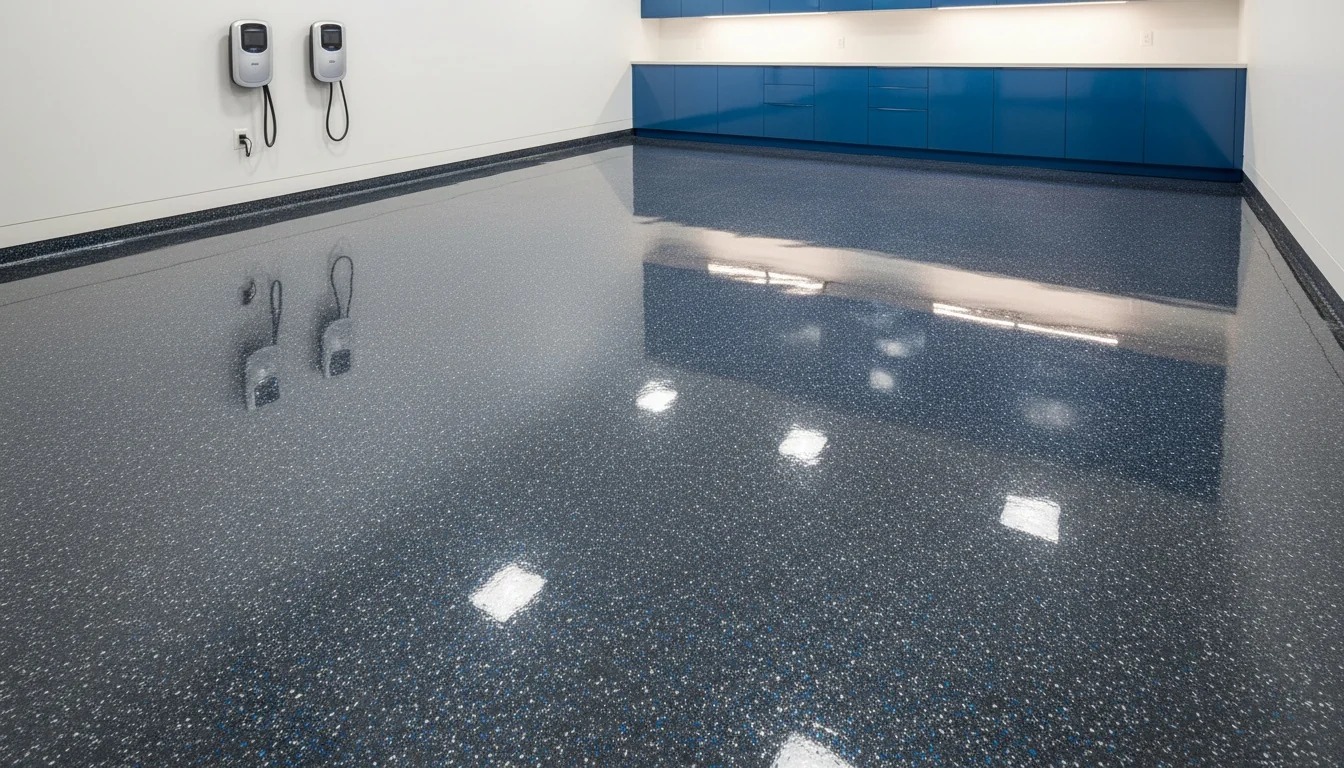
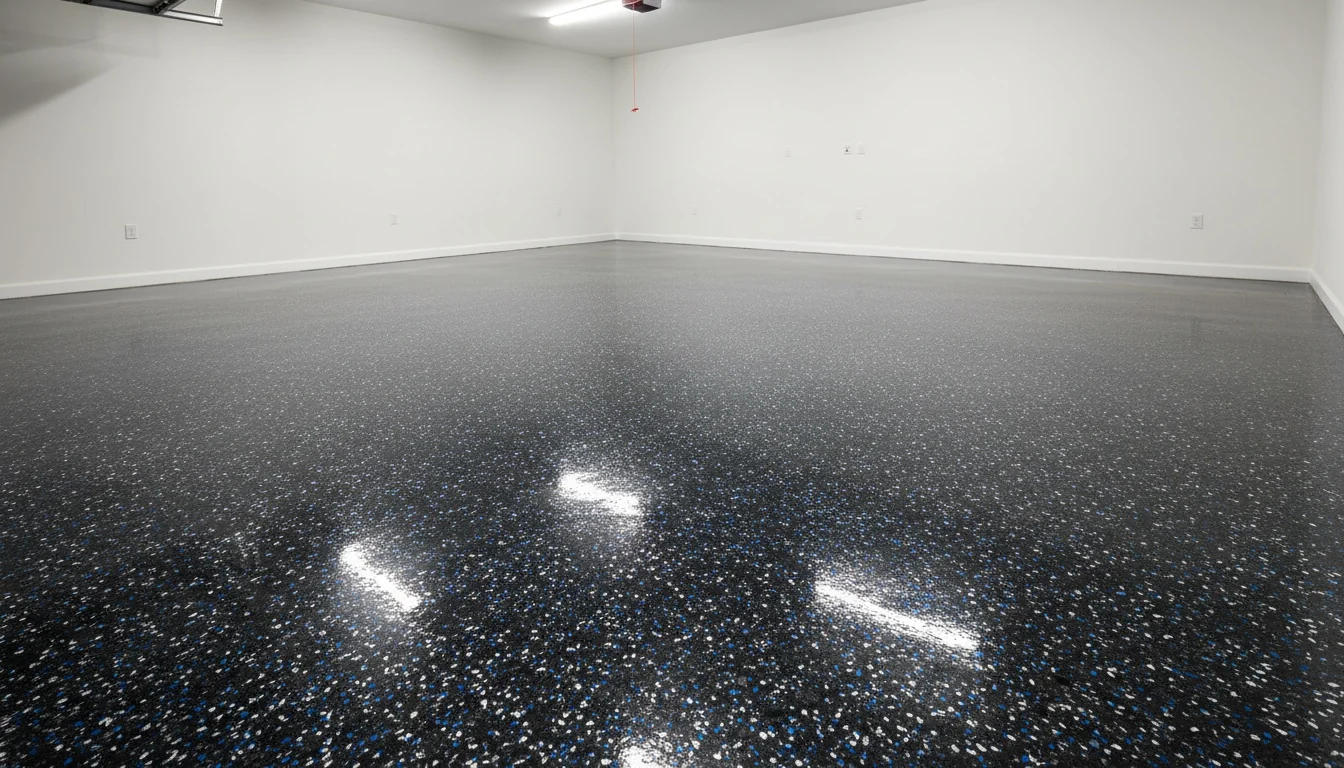
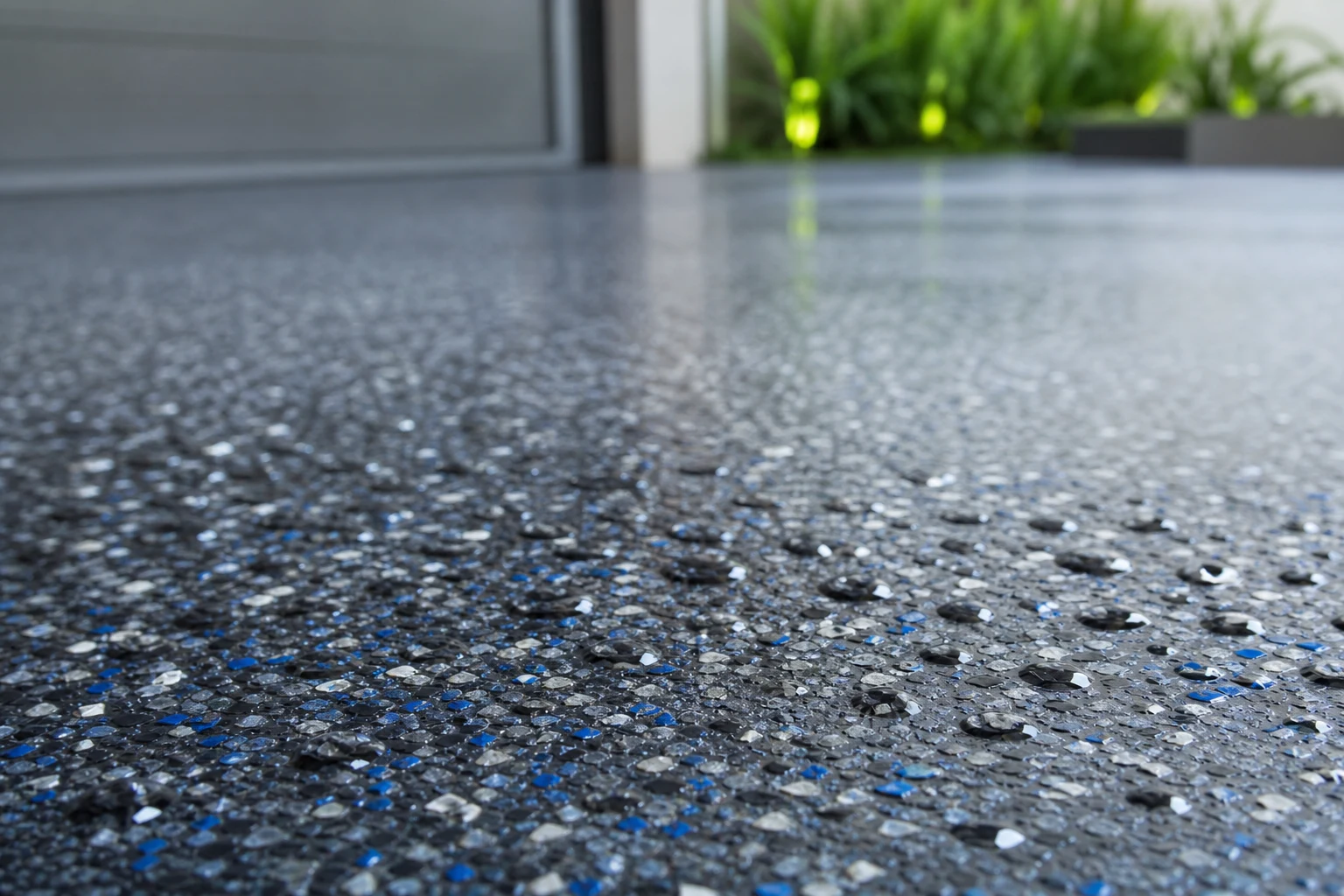
- Flake (chip) systems — coloured vinyl flakes broadcast into the coat give a speckled, forgiving finish that hides marks and adds texture. A favourite for driveways because the flake itself helps with grip.
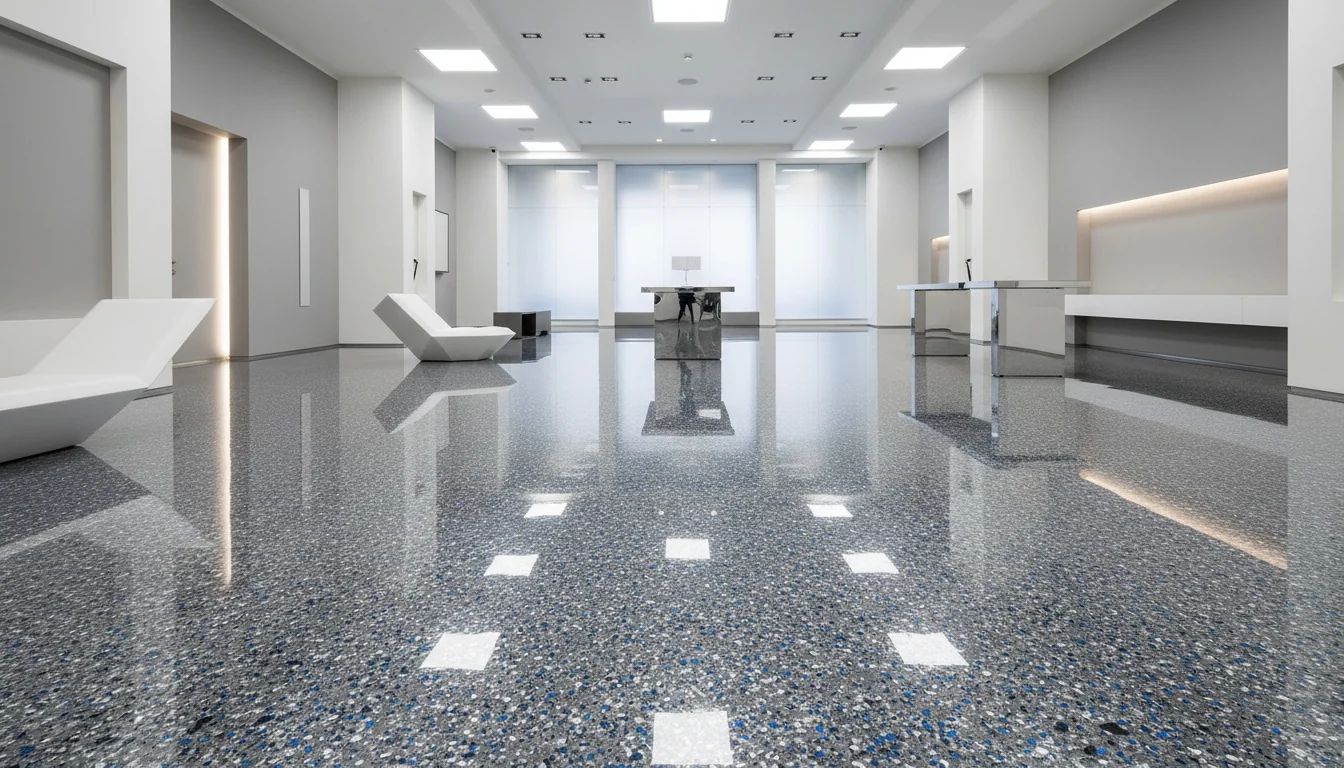
- Quartz systems — natural or coloured quartz aggregate creates a tougher, naturally textured surface that is excellent where traffic and slip resistance both matter.
- UV-stable topcoat — an aliphatic polyurethane or a polyaspartic sealer over the build. These resin families resist yellowing far better than epoxy and take the brunt of the sun and tyres. Polyaspartic also cures fast, which shortens the time the driveway is out of use.
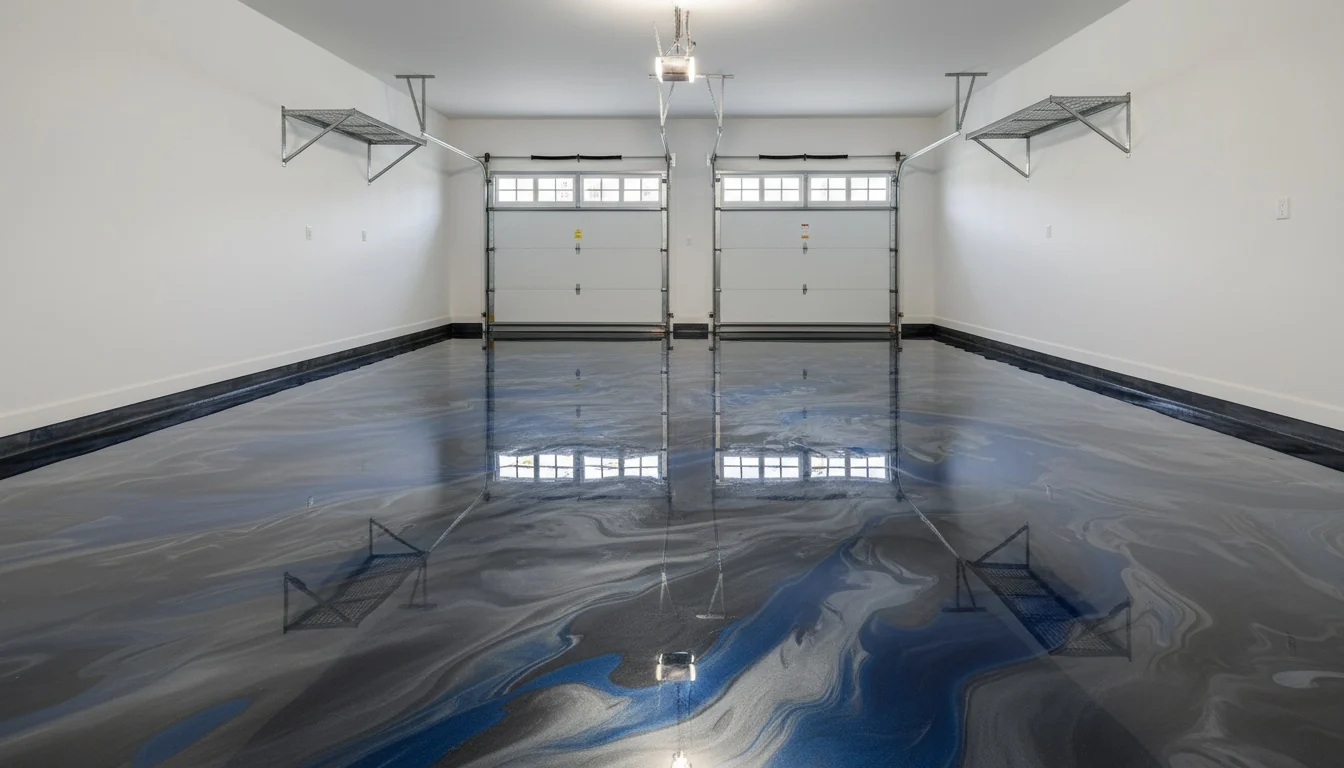
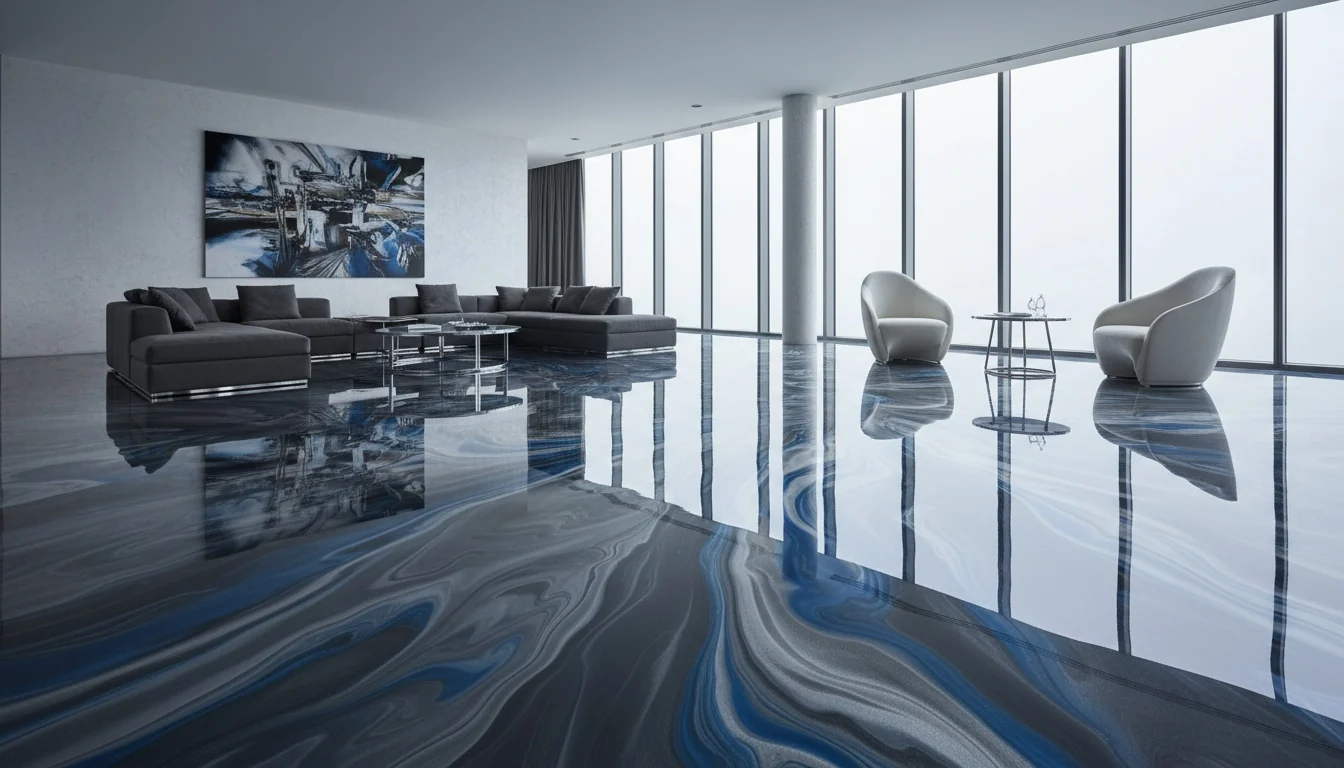
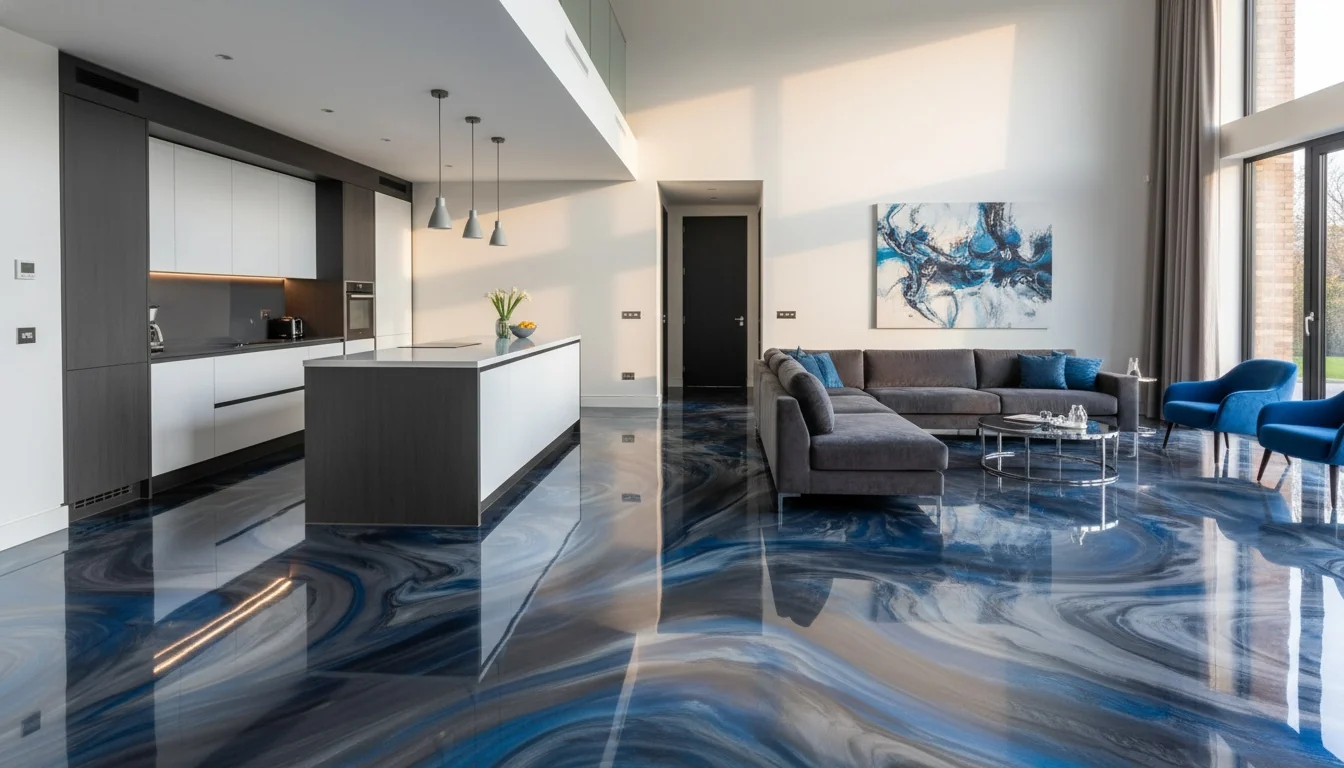
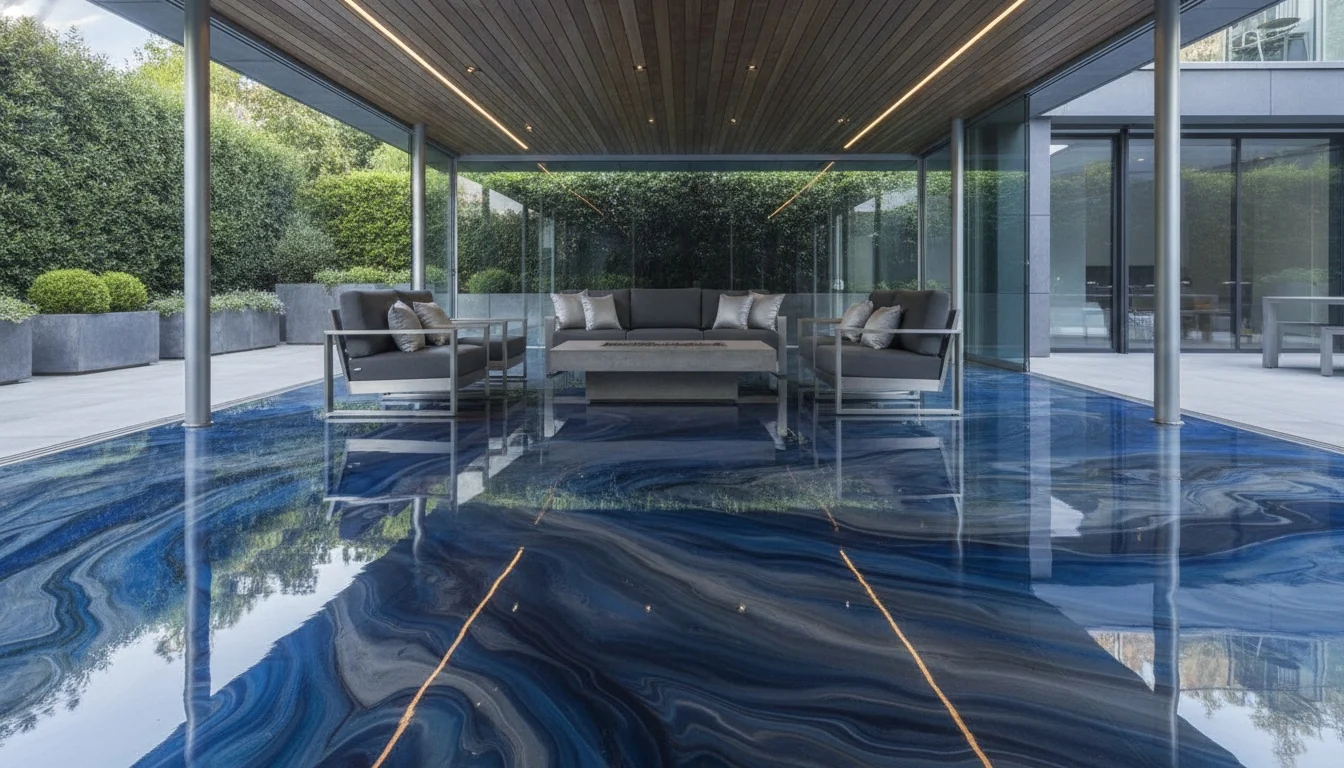
The same logic applies to patios, pool surrounds and any other exposed slab: the sun decides the specification, not the room. Many of these systems also appear in residential epoxy installations indoors, just specified differently because they never see direct UV.
Prep on outdoor slabs
Outdoors, prep matters even more than indoors, because the slab faces moisture and movement that a sheltered garage floor never does. A good installer will work through the same fundamentals every time:
- Moisture — driveway slabs sit on the ground and can wick up moisture, which pushes a coating off from below. The slab needs to be tested and, where needed, treated with a moisture barrier before coating.
- Cracks and joints — outdoor concrete moves with heat and cold. Cracks are routed and filled and control joints are respected, so the coating does not simply crack along with the slab.
- Oil and contamination — years of oil drips and dirt have to be degreased and ground away, then the surface is diamond-ground to an open profile so the coating can grip.
This groundwork is the real difference between a driveway that holds and one that peels. It is also why an honest on-site assessment is worth so much — the installer can see the state of your slab before quoting.
Realistic expectations and maintenance
An epoxy driveway done properly looks superb and wears well, but it is fair to set expectations: it works harder than an indoor floor, so it will want a fresh topcoat sooner than a garage would. Plan to give it a wash now and again, deal with oil spills before they sit, and re-coat the UV- stable top layer when it starts to dull — that periodic top-up is normal and far cheaper than a full re-do. Looked after this way it stays good for years, and you can read more on what drives how long an epoxy coating lasts in our lifespan guide.
One thing worth insisting on outdoors is grip — a smooth, mirror-gloss finish is the wrong call on a sloped, rain-exposed driveway. If you are weighing the look against safety, a textured flake finish is usually the answer: it builds traction into the surface without the floor looking industrial.
As for cost, an outdoor epoxy build with a UV-stable topcoat sits at the higher end of epoxy pricing because of the extra prep, the better topcoat and the anti-slip work — we'll give you an indicative rand-per-m² figure on the day, and you can see the broad bands on our epoxy flooring costs page before you commit.
Alternatives worth weighing
Epoxy is not the only way to finish a driveway, and a good installer will tell you when something else suits better. Exposed-aggregate concrete, stamped or coloured concrete, interlocking pavers and cobbles all handle sun and tyres without a coating to maintain, and may be the easier long-term call on a large, fully exposed drive. Epoxy wins where you want a seamless, decorative, easy-to-clean surface and are happy to re-coat the topcoat periodically. There is no single right answer — it depends on your slab, your budget and how much sun the driveway takes.
The honest wrap-up
Can you epoxy a driveway in Cape Town? Yes — and done right, it looks excellent and lasts. But "done right" is the whole game. A standard indoor epoxy carried outdoors will yellow, risk hot tyre pickup and turn slippery in the rain. What you actually want is a properly prepped slab, a flake or quartz build, a UV-stable aliphatic or polyaspartic topcoat, and an anti-slip finish — with realistic expectations about re-coating down the line. We assess your slab on-site, tell you honestly whether epoxy is the right call, and specify a system built for the outdoors rather than one that will let you down. If a driveway coating is on your list, the best next step is a free on-site look so you get advice based on your actual concrete, not a generic sales pitch.